Things to Do in Nicaragua in September
September weather, activities, events & insider tips
Low Season · Budget Friendly
September Weather in Nicaragua
Long-run averages for September in Managua
86°F (30°C)
High Temp
71°F (22°C)
Low Temp
8.5 inches (216 mm)
Rainfall
82%
Humidity
12
Sunny-Day UV
⚠ September falls within the Caribbean hurricane season, and while Nicaragua's Pacific coast rarely takes direct hits, tropical storms and depressions in the Caribbean can bring days of heavy rain across the entire country, flooding lowland roads and disrupting domestic flights. Monitor weather forecasts during your trip and have flexible plans.
⚠ Dengue fever risk is elevated throughout the wet season. Mosquito populations increase with standing water from the rains. Use DEET repellent consistently, wear long sleeves at dusk, and consider accommodation with screened windows or air conditioning that allows you to keep windows closed.
⚠ Unpaved roads in rural areas, in the northern highlands around Matagalpa and Jinotega, and in the Río San Juan department, can become impassable after sustained rain. Flash flooding at river crossings is a real hazard. Never cross a flooded road on foot or in a vehicle unless you can see the bottom.
Making the most of September in Nicaragua? Browse tours and activities in Nicaragua on GetYourGuide.
Is September Right for You?
Weigh the advantages and considerations before booking
Advantages
- + September delivers Nicaragua at its cheapest. The colonial streets of Granada and cathedral rooftops in León sit nearly empty. Accommodation rates drop dramatically from the December-through-April highs. Walk into places that require weeks of advance booking during dry season. Rock-bottom prices. Near-empty landmarks. This is the trough.
- + Independence Day hits September 14 and 15. Antorchas, torch-lit relay runs, pour through León and Managua on the night of the 14th. Next day's parades fill every plaza with marching bands and school drum corps. Street-side carne asada drifts over crowds. Nicaraguans celebrate for themselves. The energy is unmistakable. No tourist festival replicates this.
- + Pacific surf peaks in September. Beaches south of San Juan del Sur, Playa Maderas, Playa Remanso, breaks near Popoyo, receive consistent overhead waves. Southern hemisphere storms drive them. Offshore winds blow mornings. January lineups would be shoulder-to-shoulder. Now? A handful of riders. The waves are yours.
- + The landscape turns violent green. Eight months of dry season leave Nicaragua brown and dusty. September rains change everything. Ometepe's twin volcanoes emerge from low cloud. Jungle runs to the waterline. Mombacho's slopes drip with orchids and bromeliads. Catarina's mirador over Laguna de Apoyo looks lush enough to be another country. Dry season seems like fiction.
Considerations
- − The rain is real. Managua averages 8.5 inches (216 mm) in September. Hard afternoon downpours clear within an hour or two. Some days bring grey, soaking stretches that wipe out afternoons. The Caribbean side, Bluefields, the Corn Islands, gets hit harder. Boat crossings cancel without notice. Pack patience.
- − Rural roads deteriorate fast. Highways between major cities hold up fine. Unpaved roads to remote coffee fincas, northern highlands around Jinotega, river crossings in Río San Juan department turn to mud pits. A sedan adequate in March becomes a liability. You need proper four-wheel-drive off the main routes. Plan accordingly.
- − Mosquitoes thrive in standing water. Dengue risk climbs. September falls squarely in advisory season. You need serious DEET-based repellent. Apply around dawn and dusk near lakeshores and lowland areas. Long sleeves become protective gear. Not fashion. Survival. Pack both.
Short on time in September? See day trips around Nicaragua on GetYourGuide.
Best Activities in September
Top things to do during your visit
September settles over Nicaragua like a warm, damp cloth. The rainy season, called invierno by locals, though temperatures never dip below the low twenties at night, reaches one of its two annual peaks, with average rainfall around 8.5 inches for the month. Mornings often break clear and bright. The sky scrubs to a hard blue. Heat builds steadily toward 30°C by midday. Then, typically between two and four in the afternoon, the clouds stack up over the volcanic ridges and the rain arrives: heavy, theatrical, smelling of hot earth and ozone, drumming on tin roofs and turning cobblestone streets into brief rivers. By evening the air cools to something almost pleasant. The plazas fill again with the smoke of grilled plantains and the sound of chairs being dragged back onto sidewalks. This is Nicaragua at its greenest and least crowded. The volcanoes wear collars of cloud. Laguna de Apoyo turns a deeper shade of jade. The forests along the road from Managua to León are so lush they press against the windows of passing buses, and the agricultural valleys between Granada and Masaya smell of wet volcanic soil and ripening cacao. Restaurants in Granada's colonial center and along León's cathedral district operate at a fraction of their dry-season capacity, which means better tables, unhurried service, and kitchen staffs willing to talk about what they are cooking. Nicaragua's food culture, built on gallo pinto, vigorón, indio viejo, and the sour tang of nacatamal steamed in banana leaves, is regional, and September is a fine month to eat slowly through it, since there is no crowd rushing you along. Safety concerns that travelers read about online are best addressed practically: stick to well-traveled corridors between Managua, Granada, León, and the southwestern beaches. Travel by day. And use established tour operators for volcano trips and boat excursions after dark. Nicaragua remains one of the most affordable countries in Central America, and September deepens that advantage, lodging drops to its lowest rates of the year across nearly every category.

Best of Granada, Mirador de Catarina and Masaya Volcano Tour
guided_experienceThe road south from Granada climbs through villages where the smell of wood-fired tortillas drifts across the highway, then breaks open at the Mirador de Catarina, a concrete overlook perched on the rim of an ancient crater. Below, Laguna de Apoyo fills the caldera like a disc of green glass, and on a clear morning, common in September before the afternoon rains build, you can see Granada's cathedral towers and the flat shimmer of Lake Nicaragua beyond. This full-day guided route links three of Nicaragua's essential landscapes in a single arc: the colonial grid of Granada with its crumbling pastel facades and the iron tang of old churches, the cool breezes and nursery gardens of Catarina, and the sulfurous, rumbling throat of Masaya Volcano, where you stand on the crater rim and peer down at molten rock glowing beneath a haze of volcanic gas. The transitions between these stops, the changing light, the shift from cobblestone to cloud forest to bare lava field, make this more than a sightseeing checklist. It is a compressed geology lesson delivered through the soles of your shoes.
Three of Nicaragua's defining landscapes, colonial city, crater lake, and active volcano, linked in a single guided day that covers ground most independent travelers need three separate trips to see.
Insider tip: Ask your guide to stop at the Catarina nursery stalls on the approach to the mirador, where vendors sell orchids and bromeliads pulled from the surrounding cloud forest at a fraction of what they cost in Granada's tourist shops.
This month: September's afternoon rains can shroud Masaya's crater in cloud by late afternoon. Morning visits offer the best chance of seeing the lava glow against a darker sky before weather moves in.
Leon city: Walking tour by our landmarks
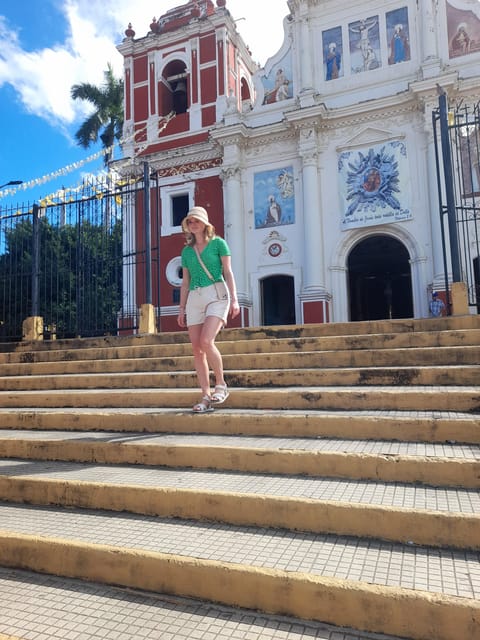
walking_tourLeón sprawls flat and hot beneath its volcanoes, a city that wears its revolutionary history on its walls, in block after block of political murals whose paint peels and fades and gets repainted by the next generation of artists. A walking tour through these streets is less a museum visit than a conversation with a city that has never stopped arguing with itself. You pass the Basilica de la Asunción, the largest cathedral in Central America, its white bulk radiating stored heat even as afternoon clouds gather, and duck into side streets where the smell of cacao roasting in backyard workshops mixes with diesel exhaust from passing buses. The guides who lead these walks are almost always locals, and their narration moves between Sandinista history, colonial architecture, and the specific corner where a particular poet once lived, the kind of layered, opinionated storytelling that no guidebook replicates.
León's street-level history, murals, bullet scars, revolutionary landmarks, only makes sense with a local narrator who can connect the painted walls to the people who lived behind them.
Insider tip: Start the walk before nine in the morning, when the cobblestones are still cool enough to stand on comfortably and the cathedral's interior is lit by low eastern light that picks out the ceiling frescoes better than the flat midday glare.

From Managua: León, Sandboarding Cerro Negro + Cathedral UNESCO
culturalCerro Negro is a young volcano, born in 1850, erupted most recently in 1999, and it looks the part: a stark black cone of loose volcanic gravel rising from green countryside like a pile of coal slag. The climb up takes about forty-five minutes, your boots sinking into fine black scoria that smells faintly of sulfur, and from the ridge you can see the Pacific coast on clear days and, more often in September, a rolling sea of cloud below. Then you sit on a thin wooden board, lean back, and slide down 450 meters of loose volcanic ash at speeds that can reach sixty kilometers an hour, the grit hissing against the board and stinging any exposed skin. This tour pairs that raw adrenaline hit with León's UNESCO-listed cathedral, which provides the cultural counterweight: cool stone, quiet naves, the faint scent of old incense, and rooftop access where you walk across the cathedral's white domes and look out at the same volcanic skyline you just descended. The contrast, sacred silence after volcanic chaos, is what makes this combination work.
Sandboarding down an active volcano and then walking the rooftop of Central America's largest cathedral in the same day is a pairing that exists nowhere else on earth.
Insider tip: Wear long sleeves and long pants for the sandboard descent regardless of the heat. The volcanic gravel abrades exposed skin on contact, and September's damp ash sticks to sunscreen and creates a gritty paste that is miserable to wash off.
This month: Wet volcanic ash in September creates a heavier, slightly slower descent compared to the dry season, which some riders prefer for the added control.

2 full days tour Granada + Lava+Leon area
day_tripTwo full days across Nicaragua's volcanic spine is enough time to feel the country shift beneath you, from the colonial formality of Granada, where horse-drawn carriages still clatter over cobblestones slick with September rain, through the sulfur-tinged darkness of a lava-viewing excursion, and onward to León's revolutionary grid of murals and churches. This itinerary covers the ground that most travelers spend a week assembling piecemeal, and it does it with overnights that let you see both cities in their evening mode: Granada's waterfront restaurants serving fresh Lake Nicaragua guapote under string lights, León's student bars spilling cumbia music onto sidewalks still steaming from the afternoon downpour. The transitions between cities pass through some of Nicaragua's most productive agricultural land, sugarcane, rice paddies, cattle ranches, and the guides on this route tend to narrate the countryside as fluently as the cities.
Two days, two colonial cities, and a volcano at night, this is the compressed Nicaragua itinerary for travelers who want depth without a week of logistics.
Insider tip: Pack a headlamp with a red-light mode for the lava-viewing portion. White light washes out the glow of the crater, and most tour-provided flashlights are too bright to let your eyes adjust to the magma.

Masaya Volcano Night Tour!!!
guided_experienceAfter dark, Masaya Volcano stops being a geological attraction and becomes something more primal. The daytime views, impressive enough, with sulfur plumes rising from the crater and parrot colonies nesting impossibly in the warm rock, give way to a scene that requires no interpretation: a lake of molten rock glowing orange and red at the bottom of the crater, its surface cracking and reforming in slow motion, throwing enough light to cast shadows on the faces of the people standing at the rim. The heat rises in waves you can feel on your cheeks from twenty meters back, and the sound is a low, irregular rumble punctuated by the crack of cooling rock. Night tours are timed to arrive after sunset, when the contrast between the dark sky and the lava is sharpest, and September's early sunsets, around 5:45 PM, mean tours can begin at a reasonable hour. The park service limits the number of vehicles at the crater rim at any one time, so the experience feels less like a tourist attraction and more like a private audience with something dangerous.
Standing at the rim of an active volcano at night, watching molten lava churn below your feet, is one of the few travel experiences that delivers exactly the drama it promises.
Insider tip: Position yourself on the upwind side of the crater rim. The sulfur dioxide plumes can trigger coughing and eye irritation, and in September the wind direction shifts more frequently than in the dry season, so pay attention when your guide calls out wind changes.
This month: September's cloud cover occasionally blocks the crater view entirely. Operators typically monitor conditions and will reschedule if visibility is poor, so book with a flexible evening as backup.

Granada Islets Boat Tour (The best in town)
cruiseThe isletas of Granada, 365 small islands scattered across the northwestern corner of Lake Nicaragua, were born when Mombacho Volcano collapsed thousands of years ago, flinging chunks of itself into the lake. Today they are a strange, quiet archipelago of private homes, fishing shacks, a ruined Spanish fortress, and islands so small they hold a single tree and a pair of nesting egrets. A boat tour threads between them in the late afternoon light, when the water turns from grey-green to copper and the only sounds are the slap of small waves against the hull and the calls of oropéndolas from the shoreline canopy. In September the lake level is high, near its annual peak, and the channels between islands narrow, bringing you closer to the vegetation: trailing vines, flowering water hyacinth, the sweet-rot smell of decaying plant matter at the waterline. Fishermen in wooden pangas pull up guapote and mojarra with hand lines, and if your boat captain knows them, they will hold up their catch for inspection, silver-scaled fish still flexing in the afternoon heat.
A slow boat through hundreds of volcanic islands on a freshwater lake the size of a small sea, close enough to trailing vines and nesting birds to touch them.
Insider tip: Book the late afternoon departure rather than the midday slot. The September sun is fierce on open water at noon, and the afternoon light between three and five, before the rain arrives, turns the lake surface golden and brings the bird colonies to their noisiest.
This month: September's high lake levels push boats closer to the island vegetation, which improves wildlife viewing but can close some of the narrower channels between islands, captains adjust routes accordingly.
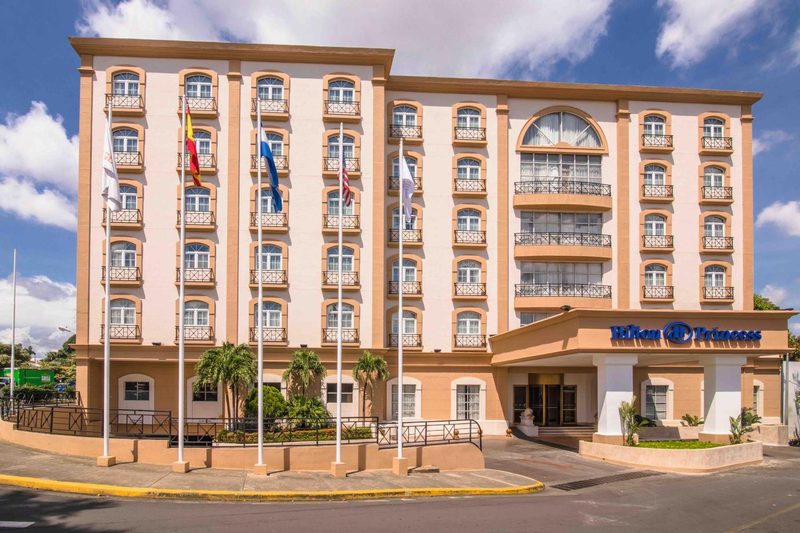
Where to Stay in Nicaragua in September
Hand-picked hotels across price tiers for September travellers.
Public Holidays in September
Dates that affect opening hours, transport and crowds
Battle of San Jacinto
Observed nationwide as a public holiday.
Independence Day
Observed nationwide as a public holiday.
Battle of San Jacinto
Observed nationwide as a public holiday.
Independence Day
Observed nationwide as a public holiday.
Packing Checklist
Bookmark this page — your progress is saved between visits
Need the full list with shopping links?
Climate-specific gear, brand recommendations, and what to leave at home.
View Nicaragua Packing List →Essential Tips
Insider knowledge and common pitfalls to avoid
Insider Knowledge
The afternoon rain pattern in September is remarkably predictable once you learn to read it. Mornings are almost always clear, clouds build after noon, and the downpour usually hits between 2 PM and 5 PM. Plan every outdoor activity for the morning. Schedule lunch during the rain window. You will lose surprisingly few hours to weather. Locals have done this their entire lives. Follow their rhythm.
Vigorón is Granada's signature street food and one of the best things you will eat in the country. It is a plate of boiled yuca, chicharrón (twice-fried pork rind with a shatteringly crisp crust and a layer of fat beneath that melts on your tongue), and a sharp curtido slaw of shredded cabbage and tomato dressed in vinegar. The women selling it from baskets in Parque Central wrap it in a banana leaf that imparts a faint grassy fragrance to the warm yuca. Eat it standing up. That is how it is meant to be eaten.
Nicaragua's two coasts are different countries in September. The Pacific side gets its rain in those predictable afternoon bursts and dries out in between. The Caribbean coast, Little Corn Island, Big Corn Island, the Miskito Coast, receives heavier, more sustained rain and rougher seas that can strand you if boat services are cancelled. If the Caribbean is your priority, March through May is a far safer window. September belongs to the Pacific side and the highland lakes.
Gallo pinto, the rice and beans dish that is Nicaragua's breakfast staple, varies more than visitors expect. The Managua version leans on red beans and a splash of Worcestershire-style Lizano sauce. The Caribbean coast uses coconut milk and red kidney beans, producing something richer and slightly sweet. At a market comedor in Masaya or Estelí, it arrives on a plate with cuajada (fresh crumbly white cheese), a fried egg with lacy edges, fried plantain slices that are caramelized and soft, and a cup of sweet, milky coffee. The whole plate is budget-friendly even by Nicaraguan standards. It will carry you until mid-afternoon.
Avoid These Mistakes
Planning a Caribbean coast trip in September. Travelers fixated on Little Corn Island or Pearl Lagoon often miss that September is peak wet season on the Atlantic side, with heavier sustained rain and rough seas that cancel the panga boat crossings for days at a stretch. The Pacific coast and the central highlands are where September works. The Caribbean is a different season entirely.
Underestimating distances on the map. Nicaragua is not a large country on paper, but a drive from Managua to León that looks like 90 km (56 miles) and should take an hour and a half can double in September when a stretch of highway floods or a bus breaks down on a single-lane bridge. Build slack into every transit day. An extra two hours is not cautious, it is realistic.
Skipping León for Granada, or the reverse. Most first-time visitors pick one and ignore the other because they look similar on paper, colonial cities with churches and plazas. They are not similar at all. Granada is polished, lake-facing, built around tourism, and has the boat access to Las Isletas and proximity to Masaya Volcano. León is rawer, hotter, university-driven, surrounded by volcanic landscape including Cerro Negro, and has the country's most important cathedral. They are 3.5 hours apart by shuttle, and doing both is entirely feasible even in a week. Choosing only one is the mistake.
Ready to plan your trip to Nicaragua?
Now that you've got the research covered, here's where to go next.
Explore More Activities in Nicaragua
Didn't see anything interesting yet?
Browse Viator's full catalog of tours, day trips, food experiences, and private guides in Nicaragua.
See All Nicaragua Tours on Viator