Things to Do in Nicaragua in June
June weather, activities, events & insider tips
Low Season · Budget Friendly
June Weather in Nicaragua
Long-run averages for June in Managua
88°F (31°C)
High Temp
73°F (23°C)
Low Temp
8.8 inches (224 mm)
Rainfall
85%
Humidity
12
Sunny-Day UV
⚠ Afternoon downpours hit hard. Unpaved roads flood. Approach roads to Ometepe Island suffer. Somoto Canyon access worsens. Northern highlands isolate. Four-wheel drive becomes essential. Flexible scheduling matters more. Off-highway travel demands both. Plan for delays. Expect them.
⚠ Mosquito risk jumps in June. Standing water breeds them. Daily rains create habitat. Lowlands suffer most. Dengue is present. Zika is present. Chikungunya is present. Prevention is not optional. DEET repellent. Long sleeves at dusk. Screened accommodations. These are requirements. Not suggestions.
⚠ Tropical depressions occasionally form. Caribbean origins bring trouble. Multi-day heavy rain follows. The usual afternoon pattern breaks. Urban streets in Managua flood. Transport links to Corn Islands disrupt. Río San Juan access suffers. These events pass. But they disrupt plans. Build flexibility. Expect interruptions.
Making the most of June in Nicaragua? Browse tours and activities in Nicaragua on GetYourGuide.
Is June Right for You?
Weigh the advantages and considerations before booking
Advantages
- + Nicaragua transforms in June. The dusty brown hills of dry season vanish. Every slope erupts into green so saturated it almost hurts. Volcanoes ringing Lago de Managua wear thick emerald coats. Coffee plantations in the Matagalpa highlands hum with new growth. Even Granada's streets turn lush. Bougainvillea and flame trees spill over colonial walls. Photographers find the country at its most dramatic. Afternoon storm clouds stack into enormous anvils behind the Cathedral of León.
- + Low season pricing drops accommodation rates across the board. The difference is stark. Boutique hotels in Granada that require weeks of advance booking in February have same-week availability in June. Beach houses in San Juan del Sur that command premium rates from December through Easter sit half-empty. You will negotiate better. You will eat better for less. You will move through the country without competing for every sunset viewpoint.
- + Mangoes. June is peak mango season in Nicaragua. This is not a minor detail. Street vendors in Managua, Granada, and León sell Rosa and Tommy Atkins varieties that were on the tree that morning. The flesh is fragrant and dripping-ripe. Eating one without a napkin is a commitment. Jocotes, the tart little stone fruits Nicaraguans eat green with salt, are also at their best. The markets in Masaya and Mercado Oriental in Managua become tropical-fruit galleries. The air grows thick with the cloying sweetness of mamón chino and nancite.
- + Surfing along the Pacific coast picks up considerably in June. South swells from the Southern Hemisphere winter start hitting consistently. San Juan del Sur and the breaks north and south of town, Playa Maderas, Playa Remanso, and Playa Hermosa, receive overhead swells with increasing regularity. The lineup is a fraction of what it becomes in the northern-hemisphere winter surf season. Water temperature hovers around 28°C (82°F). A rashguard is all you need.
Considerations
- − The rain is real. It shapes your day. Managua averages 224 mm (8.8 inches) in June. The pattern tends toward fierce afternoon downpours rather than all-day drizzle. Those storms can be violent. Sheets of water turn unpaved roads to mud within minutes. Visibility drops to nearly nothing if you are driving. Morning activities are your friend. By 1 or 2 PM, the sky often turns iron-grey and stays that way until evening. Plan accordingly. Otherwise you will spend afternoons staring at rain from a hotel corridor.
- − Road conditions deteriorate sharply in the rainy season. This happens outside the paved highway network. The road to San Juan del Sur from Rivas is fine. Secondary routes to places like the Somoto Canyon, the northern highlands, or the approach roads on Ometepe Island can become hazardous. Mudslides, washouts, and flooded creek crossings are not unusual. Four-wheel drive is not optional if you are self-driving beyond the Pan-American corridor. Bus services continue. Delays are common and uncomfortable.
- − Mosquitoes and the diseases they carry are a legitimate concern in June. Standing water from daily rains creates breeding habitat everywhere. Dengue transmission historically peaks in the rainy months. Zika and chikungunya are also present. Long sleeves at dusk, DEET-based repellent, and accommodations with screens or air conditioning are necessities. The highlands around Matagalpa and Jinotega, at 800-1,200 m (2,600-3,900 ft) elevation, have noticeably fewer mosquitoes than the lowland cities.
Short on time in June? See day trips around Nicaragua on GetYourGuide.
Best Activities in June
Top things to do during your visit
June deepens Nicaragua's invierno, the green season. Afternoon downpours sweep the volcanic highlands. Lowland lakes swell with copper-tinted runoff. Average highs settle around 88°F, a retreat from April's searing peak. The air thickens with moisture. Every surface gleams, freshly varnished: the terracotta roof tiles of Granada, the basalt walls of León's cathedral. Mornings break clear and luminous. The sky holds hard blue until early afternoon. Cumulus towers build over the Maribios volcanic chain. Warm rain hammers cobblestones for an hour or two. Then clouds dissolve into pink-streaked twilight. The rhythm shapes your day. Explore before noon. Retreat to a corridor restaurant for vigorón, fried pork rind with yuca and curtido. The vinegar tang cuts through humidity. Step out once gutters stop running. The green season thins visitor numbers considerably. That shift changes every encounter. In Granada, horse-drawn carriages wait without queues on Calle La Calzada. Launch captains at the islet dock linger, pointing out howler monkeys without pressure from packed manifests. In León, the student city's calendar has wound down. The UNAN campus empties by mid-June. Streets around the cathedral belong to shoe-shine vendors and fruit sellers pushing carts of jocote and mango verde dusted with chili salt. The sweet-hot scent hangs in still air between storms. The rain itself is theater. Watching Masaya Volcano's sulfurous plume from the crater rim while lightning crackles behind you, that sensory experience the dry season cannot replicate. Arrange travel insurance before departure. Road conditions in rural areas deteriorate after heavy rains. Some Pacific coast beach roads become temporarily impassable. Dining is most rewarding now. Rains coax out ingredients that define Nicaraguan cooking at its best: fresh-picked cacao in the highlands, lake perch called guapote on Granada menus, grilled whole with garlic and lime, flesh firm and faintly smoky from wood fire.

Best of Granada, Mirador de Catarina and Masaya Volcano Tour
guided_experienceThis full-day circuit links three concentrated landscapes into a single arc: colonial streetscape to volcanic rim. It begins among Granada's pastel-fronted houses, roasting cacao drifting from doorways along Calle Atravesada. Then it climbs to Mirador de Catarina, a lookout terrace where Apoyo Lagoon sits below like a disc of green glass cradled in a collapsed caldera. Wind carries clean mineral scent up from hundreds of feet below. The tour culminates at Masaya Volcano. You stand at the edge of Santiago crater, peer into the glowing lava pool. Sulfur heat presses against your face. The roar of escaping gas echoes off crater walls.
It compresses three radically different Nicaraguan landscapes, colonial city, jungle-fringed crater lake, and active lava, into a single guided day that would take twice as long to navigate independently.
Insider tip: Ask the guide to time the Catarina stop for mid-morning, before the lake clouds over. The reflection of the far crater wall on the lagoon surface only holds when wind is still. Mornings in June tend to deliver that calm.
This month: June's cloud cover can obscure the Apoyo Lagoon view from Catarina by early afternoon. Afternoon rains may shorten time at the Masaya crater rim. Morning departures avoid both.
Leon city: Walking tour by our landmarks
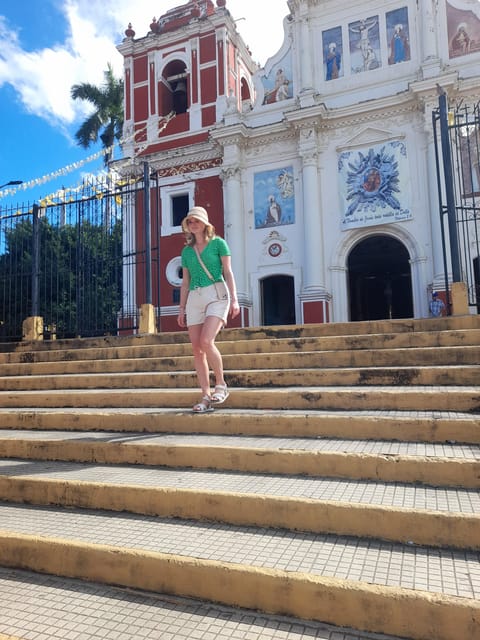
walking_tourLeón sprawls lower and wider than Granada. Its grid of cracked-plaster façades opens onto courtyards where bougainvillea spills over ironwork balconies. The air smells of damp earth and wood smoke from backyard cooking fires. This walking tour threads through revolutionary murals, bold Sandinista-era paintings covering entire building sides in reds and blacks. It passes the Baroque bell towers of Basílica de la Asunción. You can climb the whitewashed roof for a panorama stretching from terra-cotta roofscape to the conical silhouette of Cerro Negro. Guides here are often locals who grew up in the barrios they narrate. Their commentary carries lived history rather than textbook dates.
León's identity lives in street-level detail, the murals, the market stalls, the university atmosphere. A walking guide unlocks stories behind walls you would otherwise pass without a second glance.
Insider tip: Wear shoes with good grip on the cathedral roof climb. The whitewash becomes slick after June rains. Narrow walkways have no railings on outer edges.

From Managua: León, Sandboarding Cerro Negro + Cathedral UNESCO
culturalCerro Negro is the youngest volcano in Central America. It is a bare black cinder cone rising from surrounding scrubland like a heap of crushed charcoal. The hike to the summit takes roughly 45 minutes. Each step sinks ankle-deep into loose volcanic gravel radiating stored heat through boot soles. Wind at the ridge carries faint sulfur bite. Then you sit on thin plywood board, lean back, and slide. Grit hisses against the board's underside. Velocity builds until landscape blurs into streak of black slope and green valley. The day pairs this adrenaline shot with cool stone interior of León's cathedral, a UNESCO site whose thick walls muffle city noise to a hum. Only echo of footsteps on tile floor remains.
No other place on earth lets you sandboard down an active volcano in the morning and stand inside a UNESCO cathedral by lunch, separated by a twenty-minute drive.
Insider tip: Volcanic gravel is coarser and slightly damp in June. This slows board speed compared to dry season runs. Useful if you want more control on first descent. Lean further back and keep heels up if you want real velocity.
This month: June rains occasionally close the Cerro Negro access road for a few hours after heavy downpours. Outfitters monitor conditions and may shift schedule to afternoon climb if morning road is washed.

2 full days tour Granada + Lava+Leon area
day_tripThis two-day itinerary stitches Nicaragua's two rival colonial cities together with the volcanic spine separating them. Pacing is deliberate enough to let each place breathe. Day one anchors in Granada: smell of sizzling plantains on Parque Central, creak of boat hull gliding through isletas on Lake Nicaragua, orange glow of Masaya's lava after dark. Day two swings northwest to León and Cerro Negro. Trade Granada's lakeside humidity for dry furnace heat of the cinder cone and cool nave of the cathedral. Sleeping in between, rather than rushing a single-day circuit, means you catch Granada's evening light on church façades and León's early-morning market. Vendors are still stacking pyramids of dragon fruit and rambutan, skins bristling like sea urchins.
Splitting the two cities across two days eliminates highway fatigue of a single-day dash. You get the after-dark volcano experience and early-morning cathedral roof that day-trippers miss entirely.
Insider tip: Request that the Granada evening be scheduled for the Masaya night visit. In June, clouds often part after sunset. The lava glow against a clearing sky is more dramatic than what daytime visitors see.
This month: June's afternoon storms can delay the inter-city transfer. The two-day format absorbs that delay naturally, unlike a single-day itinerary that would have to cut content.

Masaya Volcano Night Tour!!!
guided_experienceAfter dark, Masaya Volcano becomes a different animal. Daytime views of Santiago crater, sulfurous steam, grey rock, distant shimmer of heat, transform into something primal. A lake of molten lava glows tangerine and crimson. Its surface cracks and reforms in slow motion. Heat radiates upward against your chin and forehead. The park road winds past silhouetted crosses marking old eruption casualties. Air smells of sulfur and warm stone. Parakeets nesting in crater walls wheel overhead in floodlights, green feathers catching orange updraft glow. The deep bass rumble of shifting magma is felt in the chest more than heard.
Seeing an active lava lake at night, close enough to feel its heat on exposed skin, is among the most visceral geological encounters available to civilian travelers anywhere on Earth.
Insider tip: Bring a bandana or buff to cover your nose and mouth. The sulfur plume shifts direction unpredictably. A strong gust can send concentrated gas directly across the viewing platform, stinging your eyes and throat.
This month: June's cloud cover can temporarily obscure the crater view. The lava glow often illuminates the cloud base from below, creating an eerie pulsing light that dry-season visitors never see.

Granada Islets Boat Tour (The best in town)
cruiseLake Nicaragua's isletas, a scattering of over 360 small islands formed by an ancient eruption of Mombacho Volcano, sit minutes by boat from Granada's municipal dock. The launch noses through channels barely wider than the hull. Ceiba trees arch overhead. Howler monkeys announce your intrusion with guttural roar disproportionately large for the animal producing it. Herons stand motionless on half-submerged rocks. The water itself is tea-colored and warm, surface dimpled by fish rising to snatch insects. Some islands hold a single family's house, laundry strung between mango trees, smell of frying garlic drifting across water. Others are wild tangles of vine and bromeliad where iguanas sun themselves on exposed roots, dewlaps pulsing orange.
The isletas are a pocket archipelago where volcanic geology, freshwater ecology, and rural Nicaraguan life overlap within arm's reach of your boat. An ecosystem you can touch, hear, and smell rather than observe from a distance.
Insider tip: Sit on the port side of the launch for the outbound leg. Morning sun lights east-facing island vegetation from behind, turning canopy translucent, while starboard passengers squint into glare.
This month: June rains raise the lake level noticeably, opening narrow channels between islands that are dry or impassable from January through April. The boat can access deeper parts of the archipelago this month than during the dry season.
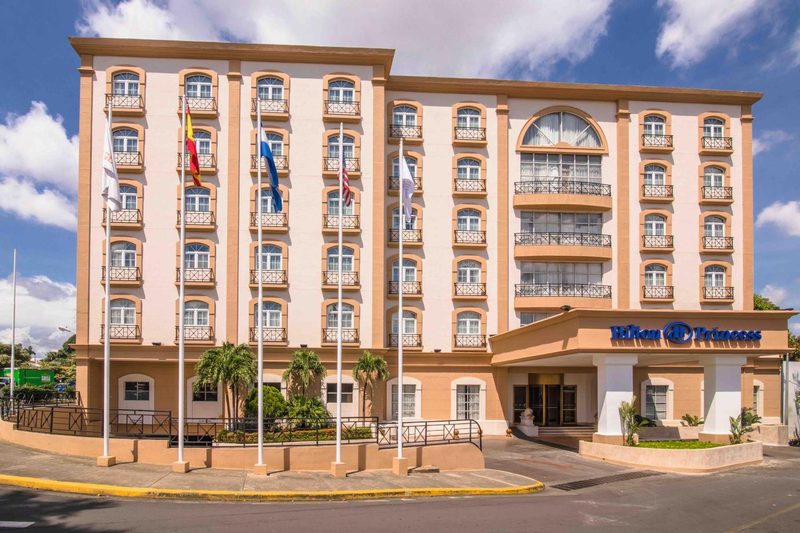
Where to Stay in Nicaragua in June
Hand-picked hotels across price tiers for June travellers.
Packing Checklist
Bookmark this page — your progress is saved between visits
Need the full list with shopping links?
Climate-specific gear, brand recommendations, and what to leave at home.
View Nicaragua Packing List →Essential Tips
Insider knowledge and common pitfalls to avoid
Insider Knowledge
June rain follows a pattern. Mornings stay clear and hot. Clouds build noon to 1 PM. Heaviest rain falls 2 to 5 PM. Nicaraguans know this rhythm. Markets open early. Outdoor work finishes before noon. Afternoons mean indoor tasks or coffee while waiting. Match your sightseeing to their schedule. You will dodge most rain without losing daylight.
Gallo pinto defines Nicaraguan breakfast. Rice and beans taste different here. Red beans, not black. Rice fries in bean broth until each grain carries earthy, slightly smoky flavor. Eat at a comedor. Look for the grandmother through the kitchen doorway. Skip hotel buffets. The real version comes in Masaya or a Managua colonia, with cuajada cheese, fried plantain, and a runny egg. Hotel versions are polite approximations. Not the same.
León and Granada sit 90 km apart. The rivalry runs centuries deep. Granada plays conservative, colonial, lake-facing. Its architecture dominates postcards. León brings university-town energy, political charge, cathedrals, street art, and extra heat from its lowland plain position. Visit both. Minimal effort. Maximum understanding. The chicken bus connects them in two hours for almost nothing. Do it.
The Corn Islands sit 70 km (43 miles) off Nicaragua's Caribbean coast. Clear water. Coconut palms. Reggae rhythms. They deliver the country's best beach experience. June brings their own rainy season. Small planes from Managua cancel often. Weather decides. If the islands are your main reason for visiting, June is a gamble. If they are a bonus on top of a Pacific and highlands itinerary, book flexible flights. Treat the islands as a pleasant possibility. Not a fixed plan.
Avoid These Mistakes
Booking only beach time ignores Nicaragua's depth. The coast is lovely. The real substance lies inland. Volcanic craters. Mountain ranges. Colonial cities. The lava lake at Masaya demands attention. Cerro Negro offers sandboarding. Granada's streetscapes reward slow exploration. León's cathedral district impresses. Travelers who stay only in San Juan del Sur miss the point. They see a surf town. It could be anywhere in Central America. They miss what makes Nicaragua distinct.
Underestimating travel times ruins itineraries. Map distances deceive. Managua to Granada is 45 km (28 miles). Managua to León is 90 km (56 miles). These numbers mean little. Road conditions matter more. June doubles or triples clock time. A February hour becomes two June hours. Flooded sections slow progress. Wet curves hide jackknifed trucks. Build buffer days. Resist packing in one more stop.
Arriving without córdobas causes problems. Cards fail outside tourist cores. Granada works. San Juan del Sur works. Upscale Managua works. Elsewhere, Nicaragua runs on cash. ATMs exist in departmental capitals. Smaller towns disappoint. Comedores want cash. Markets want cash. Transport services want cash. Withdraw at the Managua airport. Use a city bank. Do this before leaving for smaller destinations. US dollars circulate in tourist zones. Rates vary. Often they hurt.
Ready to plan your trip to Nicaragua?
Now that you've got the research covered, here's where to go next.
Explore More Activities in Nicaragua
Didn't see anything interesting yet?
Browse Viator's full catalog of tours, day trips, food experiences, and private guides in Nicaragua.
See All Nicaragua Tours on Viator