Things to Do in Nicaragua in August
August weather, activities, events & insider tips
Low Season · Budget Friendly
August Weather in Nicaragua
Long-run averages for August in Managua
88°F (31°C)
High Temp
72°F (22°C)
Low Temp
5.4 inches (137 mm)
Rainfall
76%
Humidity
12
Sunny-Day UV
⚠ Hurricane season runs through August. Nicaragua's Pacific coast rarely takes direct hits. But Caribbean-side tropical storms can disrupt flights and ferry services to the Corn Islands and affect the northern Miskito Coast with little advance warning. Monitor forecasts. Your Caribbean itinerary needs watching.
⚠ Flash floods hit hard. Heavy afternoon downpours cause flooding on rural roads, in the northern highlands around Matagalpa and Jinotega and on the slopes of Ometepe's volcanoes. River crossings passable in the morning turn dangerous by late afternoon. Check conditions locally before driving unpaved routes. Never cross flowing water on foot or in a vehicle. Respect the water.
⚠ Mosquito season peaks now. Dengue and chikungunya transmission rises during the rainy season across lowland Nicaragua, including Managua, Granada, and León. Use DEET-based repellent consistently at dawn and dusk when Aedes mosquitoes are most active. Sleep under a fan or with screens closed. Air conditioning alone does not keep mosquitoes out if doors open frequently. Protect yourself.
Making the most of August in Nicaragua? Browse tours and activities in Nicaragua on GetYourGuide.
Is August Right for You?
Weigh the advantages and considerations before booking
Advantages
- + August falls during the canícula, a lull within Nicaragua's rainy season when precipitation eases noticeably. Managua averages 137 mm (5.4 inches) of rain in August, roughly 40 percent less than June or September. Mornings tend to break clear and warm. Afternoon clouds build slowly. This gives you a reliable window for outdoor exploration each day.
- + Accommodation and tour prices drop to their annual floor. Far fewer international visitors arrive now. You'll likely have Granada's colonial plazas, León's cathedral rooftop, and the volcanic slopes of Cerro Negro largely to yourself. Dry season visitors pay double. They still share with crowds.
- + The Fiestas de Santo Domingo, Managua's largest and oldest popular festival, runs the first ten days of August. Horse parades fill the streets. Traditional street food stalls line every corner. The procession energy gives you a side of the country most visitors never encounter.
- + The volcanic landscape hits peak intensity in August. Concepción and Maderas on Ometepe wear bright green from lakeshore to cloud forest. Waterfalls on the Pacific slope run at full power. Lake Nicaragua shimmers under fast moving skies. The moody, dramatic light is something dry season visitors never see.
Considerations
- − Afternoon rain defines August. It arrives between 1 PM and 4 PM. Sudden, heavy downpours strand you under tin awnings for 30 to 60 minutes. Then skies clear to humid, golden hour light. Pack a wet weather contingency. Every outdoor plan needs one.
- − Caribbean coast access is unreliable. Flights from Managua to the Corn Islands get cancelled due to weather. Panga boat services between Big and Little Corn suspend when seas turn rough. Sometimes for days at a stretch. Plan accordingly.
- − Humidity sits around 76 percent in Managua. Average highs reach 31°C (88°F). Lowland cities like Granada feel heavier still. Equatorial heat meets thick, saturated air. Midday outdoor activity drains you. Water helps. It never quite fixes the problem.
Short on time in August? See day trips around Nicaragua on GetYourGuide.
Best Activities in August
Top things to do during your visit
Nicaragua in August delivers a country transformed by its wet season, a landscape so green it seems to pulse. The Pacific lowlands around Granada and León sit under skies that build through the morning into towering cumulonimbus columns, the air thick and warm at 88°F before the afternoon rains arrive. These downpours hammer tin roofs for an hour or two, then vanish. Streets steam. The volcanic soil smells of iron and wet earth. Average rainfall of 5.4 inches falls mostly in these concentrated bursts, which means mornings are often clear, golden, and surprisingly workable for sightseeing. Nights cool to around 72°F, warm enough to eat outdoors but merciful compared to the furnace of April, when highs push past 93°F and the country feels scorched. August sits in the middle stretch of Nicaragua's invierno, the rainy season that runs roughly May through October, and the rhythm it imposes shapes everything. Farmers in the highlands around Matagalpa and Jinotega are tending coffee plants now thick with green cherries. On the shores of Lake Nicaragua, the water level has risen enough to flood the channels between the Isletas de Granada, making boat passages easier and the birdlife louder. Herons, cormorants, and kingfishers nest in the flooded mangroves. Restaurants in Granada and León lean into the season with hearty sopa de res and indio viejo, corn-based stews that fill the dining rooms with the smell of achiote and slow-cooked beef. The tourist crowds thin dramatically compared to the dry-season peak of December through March, which means colonial churches, volcanic craters, and market stalls belong mostly to Nicaraguans going about their lives. For travelers willing to carry a rain jacket and plan mornings first, August offers something the high season cannot: an unmediated country at its most fertile and least performed.

Best of Granada, Mirador de Catarina and Masaya Volcano Tour
guided_experienceThe full-day Best of Granada, Mirador de Catarina and Masaya Volcano Tour compresses Nicaragua's colonial and geological drama into a single arc. You begin in Granada, the oldest colonial city in the Americas, where the yellow facade of La Merced church glows against the morning overcast and the Parque Central smells of roasting corn from the street vendors' comals. From there the route climbs to the Mirador de Catarina, a lookout perched on the rim of a collapsed volcanic crater where the Laguna de Apoyo spreads below. It is a near-perfect circle of jade-colored water filling a caldera, ringed by dry tropical forest that in August has turned a dense, almost unreal green. The tour then pushes on to Masaya Volcano, where you stand at the lip of the Santiago crater and peer down into an active vent, the sulfur fumes sharp enough to sting your nostrils and the rock walls streaked yellow and rust.
Three of Nicaragua's defining landscapes, colonial architecture, crater lake, and active volcano, stitched into a single guided day that covers ground a solo traveler would need two or three days to reach by bus.
Insider tip: Request a morning departure to hit the Mirador de Catarina before the clouds thicken. By early afternoon the crater lake is often obscured by low cloud, and the panoramic payoff disappears.
This month: August rains intensify the green canopy around Laguna de Apoyo, making the crater lake view from Catarina vivid compared to the brown, parched hillsides of the dry season.
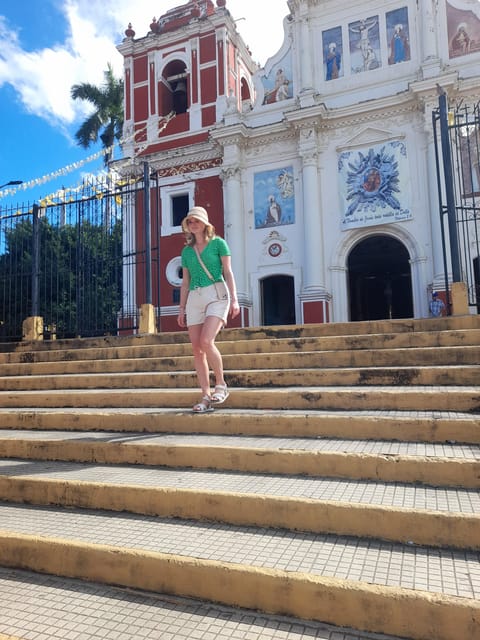
Leon city: Walking tour by our landmarks
walking_tourThe León City Walking Tour by Our Landmarks takes you through a city that was the intellectual and revolutionary capital of Nicaragua long before it became a backpacker stop. León's streets radiate from the Basílica de la Asunción, a UNESCO-listed cathedral so massive it was built to withstand earthquakes, its whitewashed walls cool to the touch even when the air outside shimmers. Walking with a local guide, you pass murals commemorating the Sandinista revolution, enormous painted faces peeling slightly in the humidity, and duck into the Museo de la Revolución, where former combatants narrate their own history in voices that still carry conviction. The walk threads through the Mercado Central, where the tang of fresh naranja agria and the sound of machetes splitting coconuts compete for your attention.
León's political and artistic soul is best absorbed on foot with someone who grew up in it, and the stories behind the murals and bullet-scarred facades do not appear in any guidebook.
Insider tip: Go in the morning before the rain and bring water. León sits lower and hotter than Granada, and by midday the concrete radiates heat that makes leisurely walking miserable.

From Managua: León, Sandboarding Cerro Negro + Cathedral UNESCO
culturalThe From Managua: León, Sandboarding Cerro Negro and Cathedral UNESCO tour pairs Nicaragua's most physically thrilling activity with its most architecturally solemn. Cerro Negro is a young, black, well conical volcano. It last erupted in 1999. Sandboarding down its 45-degree slope of loose volcanic gravel is exactly as reckless as it sounds. You climb for about 45 minutes, boots sinking into warm black ash that smells faintly of sulfur, the wind carrying grit into every fold of your clothing. At the top, the view stretches across a chain of volcanoes running northwest along the Pacific Ring of Fire. Then you sit on a plywood board, lean back, and slide. The sound of the board scraping over cinder is a low, continuous rasp, and the speed builds faster than you expect. After the adrenaline, the tour shifts to León's cathedral, where you climb the whitewashed roof and walk between the domes, the city spread below in terracotta and pastel, the towers of neighboring churches visible against the grey August sky.
No other single day in Central America delivers both a volcano sandboard descent and a walk across the roof of a UNESCO cathedral, and the tonal contrast, raw geology followed by colonial grandeur, is memorable.
Insider tip: Wear long sleeves and long pants for the sandboard descent. The volcanic gravel is abrasive enough to leave burns on exposed skin, and the provided jumpsuits vary in quality.
This month: August rains can make the upper slope of Cerro Negro slightly more compact, which increases sandboarding speed compared to the dry, loose ash of February or March.

2 full days tour Granada + Lava+Leon area
day_tripThe 2 Full Days Tour Granada, Lava, and León Area is the most complete way to see western Nicaragua if your time is short and your appetite for ground coverage is high. Day one works Granada, the colonnaded streets, the lakefront where horses still pull carriages past crumbling colonial facades, the boat ride through the Isletas, before pushing south to the lava fields around Masaya. Day two pivots to León and the volcanic northwest, where the landscape shifts from lake basin to a chain of young, ashy cones. Sleeping overnight in or near León gives you the city at dusk, when the cathedral's facade catches the last copper light and the university students fill the sidewalk cafes with the smell of cheap cigarettes and fresh-squeezed cacao drinks.
Two days, two cities, two volcanic zones. This tour eliminates the logistical friction of Nicaragua's bus system and delivers the country's western highlights with a guide who knows the backroads.
Insider tip: Pack a dry bag for your electronics. Transferring between cities in August means exposure to sudden downpours, and the open-sided vehicles used on some legs offer no protection.

Masaya Volcano Night Tour!!!
guided_experienceThe Masaya Volcano Night Tour takes the daytime crater experience and inverts it into something primordial. After dark, the Santiago crater's active lava lake, one of only a handful visible on the planet, glows a deep, shifting orange-red against the black rock walls, the heat rising in waves you can feel on your face from the viewing platform. The sulfur smell intensifies at night when the air cools and sinks, and the sound of the lava is a low, irregular gurgling, like something breathing beneath the rock. Parakeets that nest impossibly in the crater walls have gone silent by this hour, and the only other visitors are a handful of small groups and the bats that wheel through the sulfurous updraft. The drive back to Granada or Managua passes through the town of Masaya, where the night air carries the smell of grilled plantains and the glow of the Mercado de Artesanías, if your guide is willing to stop.
Watching an active lava lake after dark is one of the rarest visual experiences in travel, and Masaya is one of the most accessible places on Earth to do it.
Insider tip: Bring a bandana or cloth to cover your nose and mouth. Sulfur dioxide concentrations spike unpredictably, and the park rangers will pull you back from the rim if conditions deteriorate, so every minute at the edge counts.
This month: August's cloud cover occasionally obscures the crater rim view. But the lava glow itself is unaffected by weather. It burns through fog and mist, and overcast nights can intensify the reflected orange light against low clouds.

Granada Islets Boat Tour (The best in town)
cruiseThe Granada Islets Boat Tour glides through the archipelago of over 300 tiny islands scattered across the northwest corner of Lake Nicaragua, most of them formed by an ancient eruption of Mombacho volcano that flung boulders into the water. In August, the lake level has risen with the rains, narrowing the channels between islands and bringing the tropical vegetation, ceiba trees, flowering lianas, strangler figs, close enough to brush the boat's gunwale. Howler monkeys announce your passage with a guttural roar that carries across the water, and white egrets stand motionless on half-submerged branches, hunting fish in the tannin-dark shallows. Some islands hold a single house with a dock and a hammock. Others are uninhabited tangles of green where iguanas sun on volcanic rocks still warm from the morning. The boat passes the old Spanish fort on Isla San Pablo, its stone walls softened by centuries of moss, before looping back toward Granada's malecón, where the smell of frying vigorón, yuca, chicharrón, and curtido wrapped in a banana leaf, signals your return.
A boat ride through a volcanic archipelago on one of the largest lakes in the Americas, close enough to the wildlife to hear the monkeys breathe, with the cone of Mombacho volcano filling the southern horizon.
Insider tip: Book the morning departure. Afternoon tours coincide with the daily rain window, and while the boat has a canopy, a lake storm in August can turn choppy enough to cut the route short.
This month: August's higher lake level opens channels between the Isletas that are too shallow in the dry season, and the birdlife concentrates in the flooded margins, making wildlife sightings more frequent.
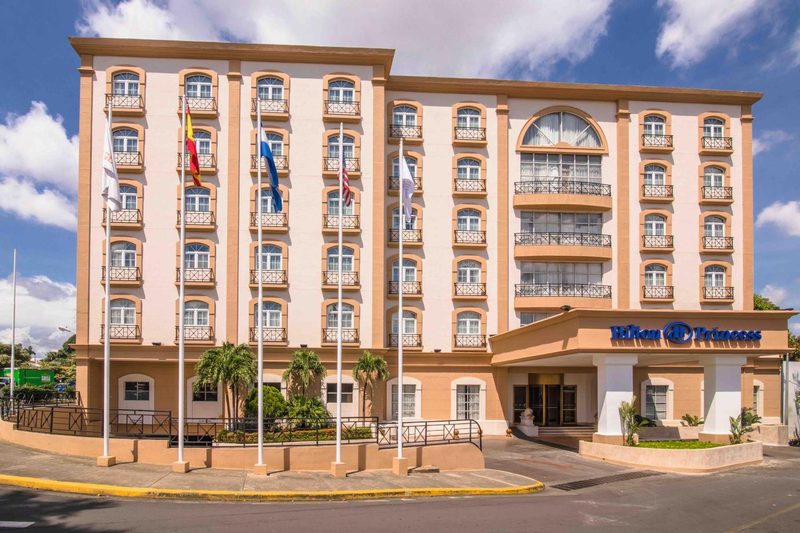
Where to Stay in Nicaragua in August
Hand-picked hotels across price tiers for August travellers.
Packing Checklist
Bookmark this page — your progress is saved between visits
Need the full list with shopping links?
Climate-specific gear, brand recommendations, and what to leave at home.
View Nicaragua Packing List →Essential Tips
Insider knowledge and common pitfalls to avoid
Insider Knowledge
August falls during the canícula, a dry window within the wet season when rainfall eases compared to the months on either side. Managua's mornings typically break clear and warm, with rain building through the afternoon. Plan outdoor activities before noon and you will dodge most downpours. This pattern is reliable enough that locals schedule outdoor events around it. Follow their lead.
The Santo Domingo festival's hípica horse parades on August 1 and 10 draw enormous crowds. But the cultural heart of the event is the bajada procession at dawn on the first. Arrive at the Santo Domingo de las Sierritas church before 6 AM to see the saint's statue begin its journey downhill. The mood is reverent then. The light is soft. By mid-morning the celebration turns into a full-throttle street party. Come early for the magic.
Nicaraguan food is regional, and August is peak season for certain preparations worth seeking out. Vigorón, a plate of boiled yuca topped with chicharrón and a sharp, vinegary curtido cabbage salad, served on a banana leaf that perfumes everything with a faint green sweetness, originated in Granada's central park and tastes different there than anywhere else in the country. Nacatamales, the massive steamed banana-leaf parcels of corn dough stuffed with pork, rice, potato, and olives, are a weekend-morning tradition that intensifies during festival weeks. The smell of them steaming at a market stall is the smell of Saturday in Nicaragua. Follow your nose.
Nicaragua rewards reasonable precaution but does not demand paranoia. Use licensed taxi services from airports, keep valuables out of sight on intercity chicken buses, and avoid walking poorly lit streets alone after dark. Outside Managua, the tourist corridor running from Granada through Ometepe to San Juan del Sur feels notably relaxed. Nicaraguans have a directness and warmth that catches first-time visitors off guard. August's low tourist numbers mean you stand out more in smaller towns, which cuts both ways. More attention from touts. But also more hospitality from people who appreciate that you came when nobody else did. Worth the trade.
Avoid These Mistakes
Building an itinerary around the Corn Islands in August. The Caribbean side of Nicaragua gets heavier rain than the Pacific during this period, flights from Managua to Big Corn get cancelled regularly, and panga boats between Big and Little Corn suspend service when seas turn rough, sometimes for several days straight. If Caribbean beaches and snorkeling are your primary goal, come between February and April when seas are calm and visibility peaks. Skip August here.
Renting a standard sedan for rural exploration after heavy rain. Nicaragua's unpaved roads, between León and the northern highlands or around Ometepe's interior, deteriorate fast during the wet season. A four-wheel-drive vehicle costs more but saves you from being stuck axle-deep in red mud on a road with no cell signal and no traffic to flag down. Budget the upgrade. It is not optional in August. Pay now or pay later.
Pack layers. Shorts and flip-flops alone will not cut it. Churches in Granada and León, including León's cathedral, the largest in Central America, where you can walk the whitewashed rooftop for a panoramic view across the city to Cerro Negro, require covered shoulders and closed shoes. Volcanic terrain demands proper footwear. Evenings cool on the lake and at altitude. Bare legs get cold fast. Pack for both cultural sites and trails.
Ready to plan your trip to Nicaragua?
Now that you've got the research covered, here's where to go next.
Explore More Activities in Nicaragua
Didn't see anything interesting yet?
Browse Viator's full catalog of tours, day trips, food experiences, and private guides in Nicaragua.
See All Nicaragua Tours on Viator