Things to Do in Nicaragua in April
April weather, activities, events & insider tips
Shoulder Season · Good Value
April Weather in Nicaragua
Long-run averages for April in Managua
93°F (34°C)
High Temp
72°F (22°C)
Low Temp
0.3 inches (8 mm)
Rainfall
58%
Humidity
13
Sunny-Day UV
⚠ Watch for extreme heat and sun exposure. Managua's average high reaches 34°C (93°F) and lowland cities like León can feel hotter. Intense tropical sun causes burns on exposed skin within twenty minutes. Reapply sunscreen every 90 minutes during outdoor activity. Seek shade between 10 AM and 3 PM. Carry at least 2 liters (0.5 gallons) of water on any hike.
⚠ Watch for dust and reduced air quality in rural Pacific lowlands. Months of accumulated drought leave unpaved roads, agricultural fields, and volcanic terrain coated in fine particulate that gets kicked up by vehicles and wind. Travelers with respiratory sensitivities should carry a bandana or light mask for road transfers between cities.
Making the most of April in Nicaragua? Browse tours and activities in Nicaragua on GetYourGuide.
Is April Right for You?
Weigh the advantages and considerations before booking
Advantages
- + Virtually zero rainfall. Managua averages just 0.3 inches (8 mm) for the entire month, making April one of the most reliably dry windows of the year. Outdoor plans hold. Volcano views stay razor-sharp. You won't lose a single day to weather. May's rains dump 5.1 inches (130 mm) by comparison. April is the last clean shot before the wet season rewrites the travel calculus entirely.
- + Post-Semana Santa sweet spot. Easter 2027 falls in late March, meaning April opens with the holiday crowds already dispersed. Every dry-season operation still runs at full capacity: boat tours on Las Isletas, surf camps at Playa Maderas, volcano guides out of León. Accommodation that was booked solid during Holy Week suddenly has openings. Rates tend to soften noticeably.
- + Best volcano visibility of the year. Months of accumulated dryness clear the atmosphere to a degree the rainy season never matches. Masaya's lava lake glows against pitch-dark skies without a wisp of cloud interference. Cerro Negro's 728 m (2,388 ft) black cone stands knife-sharp on the horizon. Ometepe's twin volcanic silhouettes reflect cleanly off Lake Nicaragua at sunrise.
- + Pacific surf in peak form. Offshore easterly winds along Nicaragua's southwestern coast groom consistent swells into clean, head-high waves at breaks near San Juan del Sur and Popoyo, with water temperatures around 28°C (82°F). You can surf in boardshorts all day without a wetsuit. The post-holiday lineups are the thinnest you'll find outside the rainy months.
Considerations
- − The heat is serious and sustained. Managua averages 34°C (93°F) and lowland cities like León run hotter, with tropical sun intense enough to burn exposed skin in under twenty minutes. Midday belongs to hammocks, ceiling fans, and cold Toña beer. Outdoor activity compresses into early morning and late afternoon windows. The adjustment takes two to three days if you're coming from a temperate climate.
- − The landscape is parched and brown. Five months with almost no rain leave the Pacific lowlands looking stark: dry pastures, leafless trees, and a fine reddish-brown dust that coats your shoes, your bag, and the inside of your nostrils on unpaved roads. For postcard-green tropical Nicaragua, you're about two months early.
- − Water pressure and supply can be unreliable in rural areas and on smaller islands by late April, when dry-season reservoirs hit their lowest levels. Hot showers become lukewarm trickles at budget guesthouses outside the main tourist corridor. On Ometepe some smaller lodges ration water in the evenings.
Short on time in April? See day trips around Nicaragua on GetYourGuide.
Best Activities in April
Top things to do during your visit
April lands at the tail end of Nicaragua's dry season. The country wears it plainly. The Pacific lowlands bake under an average high of 93°F (34°C), the air still and heavy with the smell of sun-cracked earth and charcoal smoke drifting from roadside comedores. Rainfall barely registers at 0.3 inches for the entire month. This is one of the driest windows of the year. The landscape along the chain of volcanoes running down Nicaragua's western spine looks stripped and golden. The deciduous forests shed their leaves weeks ago, exposing skeletal branches against a sky that stays a relentless, cloudless blue from dawn past five in the afternoon. Roads to the crater lakes and colonial cities are dusty but passable. The absence of mud makes trail access as good as it gets. For travelers weighing when to visit Nicaragua, April sits in a sweet spot just before the rains arrive. May brings a dramatic shift. Rainfall jumps from under half an inch to over five inches, and humidity climbs from 58% to nearly 70%. That transition means April offers dry conditions without the oppressive moisture that blankets Nicaragua's lowlands from June through October. Locals know this stretch well. Farmers prepare fields for planting, burning stubble in controlled fires that send thin columns of grey smoke across the Masaya plateau. Market stalls in Granada and Leon overflow with jocotes, the tart stone fruit that peaks in the dry months, their skins waxy and flushed red-orange. The heat is real and unrelenting. The rhythm of the day tilts early: mornings for walking, midday for shade and refrescos, late afternoons for lakeside or crater-rim excursions when the angle of the sun drops and the light turns amber.

Best of Granada, Mirador de Catarina and Masaya Volcano Tour
guided_experienceThe Best of Granada, Mirador de Catarina and Masaya Volcano Tour covers three of Nicaragua's most defining landscapes in a single guided day. You begin in Granada, the oldest colonial city in the Americas, where terracotta rooftops and crumbling mustard-yellow facades line streets so narrow the morning light only reaches the cobblestones for an hour before the walls swallow it again. From there, the road climbs to the Catarina viewpoint, where the Laguna de Apoyo sits far below in a volcanic crater, its water a deep, almost artificial turquoise ringed by forest. The tour ends at Masaya Volcano's Santiago crater, where you peer over the rim into a vent that exhales sulfurous gas in white plumes that sting the back of your throat.
Three geological and architectural landmarks compressed into one day, each at a different elevation and mood, with a guide who contextualizes what the volcanic chain means to Nicaraguan identity.
Insider tip: Bring a bandana or cloth to cover your nose at the Masaya crater rim, as the sulfur concentration can make breathing uncomfortable, when the wind shifts direction.
This month: April's bone-dry conditions mean zero cloud cover at the Catarina viewpoint, giving unobstructed sightlines across the laguna to the far crater wall. Volcanic gas visibility at Santiago crater is also sharper when humidity is low.
Leon city: Walking tour by our landmarks
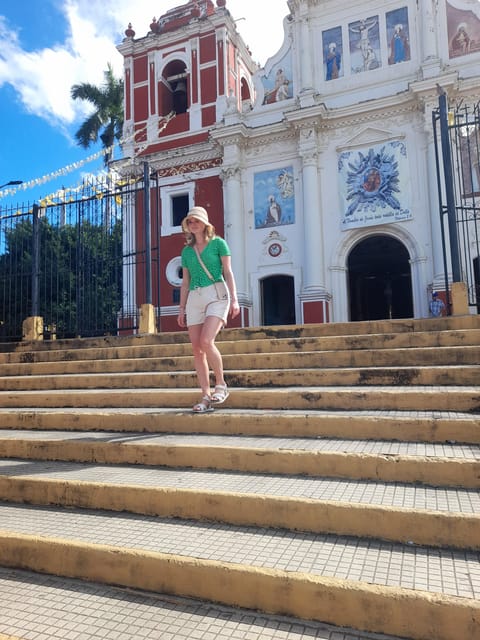
walking_tourLeon city: Walking tour by our landmarks threads through Nicaragua's intellectual and revolutionary capital on foot, a city that feels rougher-edged and more lived-in than Granada. The walk passes the Basilica de la Asuncion, the largest cathedral in Central America, its white exterior blinding under the midday sun, the interior cool and dim with the faint smell of old wood and candle wax. Side streets reveal murals from the Sandinista era, their paint fading but their imagery still sharp: raised fists, stylized farmers, revolutionary slogans in red and black. Leon's university quarter hums with student energy, motorcycles weaving past corner pulperias stacked with bags of plantain chips and bottled hot sauce.
Leon's revolutionary history and university culture give it a grittier, more politically charged atmosphere than any other Nicaraguan city, and a walking tour is the only way to read the murals and bullet-scarred walls in context.
Insider tip: Start by eight in the morning. Leon sits in a low plain with little breeze, and by eleven the reflected heat off the streets makes sustained walking taxing. Most guides will adjust the pace if you ask.

From Managua: León, Sandboarding Cerro Negro + Cathedral UNESCO
culturalFrom Managua: Leon, Sandboarding Cerro Negro + Cathedral UNESCO pairs Nicaragua's most physically thrilling activity with one of its most architecturally significant buildings. Cerro Negro is Central America's youngest volcano, a stark black cinder cone rising from the surrounding green scrubland like a pile of coal ash. You hike thirty to forty minutes up loose volcanic gravel that crunches and shifts underfoot, the wind carrying fine black grit that coats your teeth and settles in the creases of your clothes. At the summit, the view stretches across a chain of older, forest-covered volcanoes. Then you sit on a thin wooden board, lean back, and slide down the slope at speeds that can reach uncomfortable if you drag your heels wrong. The grit sprays up in a rooster tail behind you, and the ride is over in under a minute but leaves your heart hammering. Afterward, the tour pivots to Leon's cathedral, a UNESCO World Heritage Site since 2011, where you can walk across the whitewashed roof terraces and look down into the nave through skylights.
Sandboarding an active volcano is singular to Nicaragua and to Cerro Negro specifically. No other destination offers this combination of raw geological terrain and accessible adrenaline.
Insider tip: Wear long pants and a long-sleeved shirt for the descent even in the heat. The volcanic gravel acts like sandpaper on exposed skin, and most returners wish they had covered up. Goggles are usually provided but bring your own if you wear prescription glasses.

2 full days tour Granada + Lava+Leon area
day_tripThe 2 full days tour Granada + Lava + Leon area compresses Nicaragua's two colonial rivals and their volcanic surroundings into a single itinerary, and the pacing rewards travelers who want density over leisure. Day one covers Granada's pastel streetscape, the Mombacho volcano cloud forest where the air drops noticeably cooler and smells of wet moss and orchid bark, and the isletas, the cluster of small islands in Lake Nicaragua formed by an ancient Mombacho eruption. Day two pushes north to Leon and Masaya, where the lava reference in the tour name becomes literal at the Santiago crater. The two-day structure means you sleep in Nicaragua's interior rather than day-tripping from Managua, which changes the experience entirely: you hear the evening sounds of horse carts on cobblestones in Granada, eat vigoron from a banana-leaf wrap at the central market, and catch the cathedral bells at six in the morning.
Two days lets you feel the genuine atmospheric difference between Granada's lakeside colonial weight and Leon's scrappier, more radical energy, rather than blurring them into a single rushed circuit.
Insider tip: Pack a light layer for the Mombacho cloud forest even in April. The elevation shift drops the temperature noticeably from the lowland heat, and the canopy blocks direct sun, making the trails feel almost cool.

Masaya Volcano Night Tour!!!
guided_experienceThe Masaya Volcano Night Tour takes the daytime crater experience and inverts it. After dark, the Santiago crater's active lava lake glows a deep, pulsing orange-red visible from the viewing platform, the light reflecting off the rising gas plumes and casting everything in a hellish warmth. The smell of sulfur is sharper at night, possibly because the cooler air traps the gas closer to the rim. You hear the low rumble of the vent, a sound more felt in the chest than heard with the ears, punctuated by the occasional crack of rock shifting inside the crater walls. The surrounding national park goes quiet except for bats streaming out of the Tzinaconostoc cave at the park entrance, thousands of them spiraling upward in a dark column against the last blue of dusk. Nicaragua's most visited national park becomes an almost private experience after sundown.
Seeing an active lava lake at night, when the glow dominates the crater and the park empties of daytime crowds, is one of Central America's most visually arresting experiences.
Insider tip: The national park limits nighttime visits to specific time slots and caps the number of vehicles at the crater rim. Booking ahead rather than showing up guarantees your slot. Bring a headlamp with a red-light mode to preserve your night vision on the walk.
This month: April's dry atmosphere and negligible cloud cover mean the lava glow is unobstructed. During the rainy season, low clouds and mist can obscure the crater, diminishing or entirely blocking the view.

Granada Islets Boat Tour (The best in town)
cruiseThe Granada Islets Boat Tour (The best in town) motors through the archipelago of over 350 tiny islands scattered in Lake Nicaragua just off Granada's shore. These isletas formed when Mombacho volcano partially collapsed thousands of years ago, hurling rock and earth into the lake, and they remain thickly forested with tropical trees whose roots grip the shoreline and trail into the warm, brown-green water. Howler monkeys announce your approach with guttural bellows that carry across the water, and herons stand motionless on half-submerged branches. Some islands hold a single house, others a small restaurant where you can pull up and eat fresh-caught guapote bass, its flesh white and firm with a clean, mild flavor. The boat passes close enough to the vegetation that you can smell the damp green of overhanging branches and feel the occasional spray of warm lake water when the wake rebounds off an island's rocky edge.
The isletas are a geological oddity found nowhere else in Central America, and navigating them by boat gives you a perspective on Granada's volcanic origins that the city streets cannot.
Insider tip: Ask your boat captain to route past the Monkey Island sanctuary. But do not attempt to feed or touch the monkeys despite other tourists doing so. The afternoon light from the west makes the best photographs of the forested islands. But morning tours are cooler and quieter.
This month: Lake Nicaragua's water level is at its lowest in April after five months of dry season, which exposes more of the islands' rocky bases and makes some narrow channels between isletas impassable. Boats adjust their routes accordingly. But the lower water also means clearer visibility into the shallows.
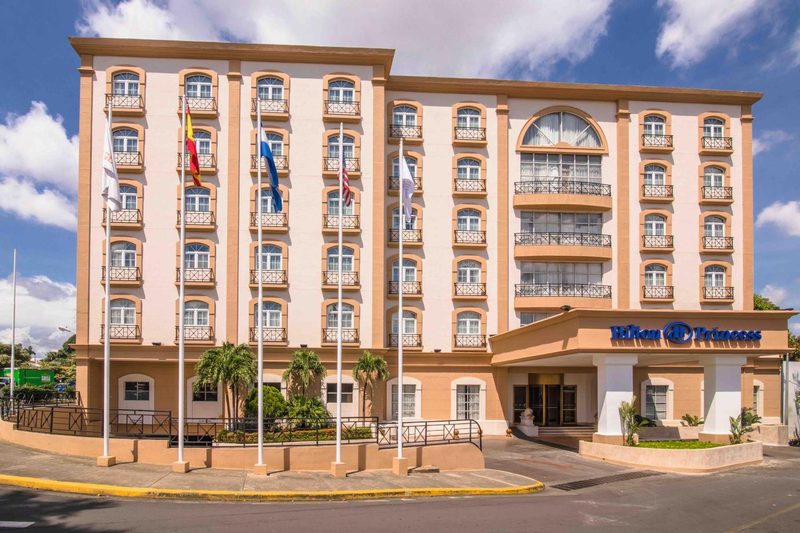
Where to Stay in Nicaragua in April
Hand-picked hotels across price tiers for April travellers.
Public Holidays in April
Dates that affect opening hours, transport and crowds
Holy Thursday
Observed nationwide as a public holiday.
Holy Thursday
Observed nationwide as a public holiday.
Packing Checklist
Bookmark this page — your progress is saved between visits
Need the full list with shopping links?
Climate-specific gear, brand recommendations, and what to leave at home.
View Nicaragua Packing List →Essential Tips
Insider knowledge and common pitfalls to avoid
Insider Knowledge
Eat at the fritanga stands, not the tourist restaurants. These open-air evening grills appear on sidewalks across every Nicaraguan city around 5 PM. The best ones in Granada line the south side of Parque Central. Carne asada over mesquite charcoal, fried plantain chips, gallo pinto with a brick-red skin of caramelized rice, all handed over on a banana leaf while the smoke drifts across the park. Follow the crowd of locals sitting three-deep on plastic chairs. The food on Calle La Calzada is priced for tourists. It's made without the same care.
Start every day before 6 AM. Disappear indoors by 10. Nicaraguan mornings are gorgeous. Cool enough to walk comfortably, markets opening with the clatter of metal shutters and the smell of fresh tortillas on the comal, schoolchildren in white uniforms threading between parked motorcycles. By mid-morning, the heat walls in so hard that locals vanish until about 3 PM. The midday retreat is not laziness. At 34°C (93°F) with direct tropical sun, it is survival strategy. Plan your outdoor time for the 5:30-to-9:30 AM window. Retreat to a hammock or an air-conditioned cafe through the worst of it. Emerge again around 4 PM for the golden-light stretch to sunset.
Pull enough córdoba cash for two to three days before leaving Managua, Granada, or San Juan del Sur. ATMs in smaller towns, Moyogalpa on Ometepe, Catarina near Masaya, the villages along the road to Cerro Negro, routinely run out of bills on weekends. Card machines outside the main tourist corridor are unreliable at best. Ferry terminals, market stalls, rural guesthouses, and taxi drivers are all cash-only. Keep small denominations. Nobody makes change for a large note.
Saturday and Sunday mornings mean nacatamal. Massive steamed banana-leaf bundles stuffed with masa, slow-cooked pork, rice, olives, and peppers, sold from home kitchens and market stalls starting before dawn. In León, the vendors at Mercado Central sell out by 9 AM. In Granada, look for the handwritten signs in residential doorways near Calle Atravesada. Nacatamal is the meal most travelers miss entirely. They are still in bed when it happens. No restaurant replicates what a Nicaraguan grandmother does with a banana leaf and a lifetime of practice.
Avoid These Mistakes
Scheduling outdoor activities between 11 AM and 3 PM is a mistake. The midday heat in April is not a minor inconvenience. At 34°C (93°F) under direct tropical sun, it can become a real health risk on exposed terrain. Tourists who push through midday hikes on Cerro Negro or the upper slopes of Concepción routinely end up dehydrated, heat-sick, or badly burned. Every experienced guide in Nicaragua starts at dawn for a reason. Do what the locals do. Rest in the shade. Move again when the shadows lengthen.
Taking unmarked taxis or negotiating rides with freelance drivers at Managua's Augusto C. Sandino International Airport is risky. Licensed airport taxis operate from inside the terminal with fixed zone-based fares. They are the only authorized option in the arrivals hall. Walking outside to hail a random car to save a bit of money is one of the most common ways visitors end up overpaying, riding in circles, or both. Arrange a transfer through your accommodation before you land. Use the official taxi counter inside arrivals.
Treating Nicaragua as a beach-only destination sells the country short. San Juan del Sur and the Corn Islands attract most of the international attention. The volcanoes, Masaya's lava lake, Cerro Negro's sandboarding runs, Ometepe's twin peaks rising from the lake, are what separate Nicaragua from every other Central American coast. April's clear, dry atmosphere makes this the strongest volcano month of the year. Spending the entire trip on a beach you could find in Costa Rica or Honduras is a genuine missed opportunity.
Ready to plan your trip to Nicaragua?
Now that you've got the research covered, here's where to go next.
Explore More Activities in Nicaragua
Didn't see anything interesting yet?
Browse Viator's full catalog of tours, day trips, food experiences, and private guides in Nicaragua.
See All Nicaragua Tours on Viator