Things to Do in Nicaragua in May
May weather, activities, events & insider tips
Low Season · Budget Friendly
May Weather in Nicaragua
Long-run averages for May in Managua
93°F (34°C)
High Temp
74°F (23°C)
Low Temp
5.1 inches (130 mm)
Rainfall
69%
Humidity
12
Sunny-Day UV
⚠ Afternoon thunderstorms arrive with little warning and can produce intense lightning, over the volcanic highlands and exposed ridges like Cerro Negro. Do not be on an exposed summit or ridgeline after noon. Plan morning hikes.
⚠ Unpaved roads on Ometepe Island and in the northern highlands around Matagalpa and Jinotega become muddy and occasionally impassable after heavy rain. A four-wheel-drive vehicle is strongly recommended if you are driving outside paved highways in May. Book early.
⚠ Mosquito-borne illness risk increases as the rains begin. Dengue is present in lowland areas, around Managua, Chinandega, and the Caribbean coast. Use repellent consistently at dusk and dawn, and sleep under a treated net if your accommodation lacks screens. Protect yourself.
Making the most of May in Nicaragua? Browse tours and activities in Nicaragua on GetYourGuide.
Is May Right for You?
Weigh the advantages and considerations before booking
Advantages
- + May is when Nicaragua's dry brown landscape flips to green almost overnight. The first rains break months of dust, the volcanic slopes around Ometepe and Mombacho turn emerald, and the air loses that scorched-earth quality it carries through March and April. For photographers and anyone who cares about what the country looks like, this transformation is worth the trade-off of a wet afternoon here and there.
- + Low season pricing kicks in hard. Accommodation rates across Granada, San Juan del Sur, and León tend to drop noticeably from their December-through-April peaks. You'll find rooms at places that were booked solid in February, and you won't be competing with fifty other travelers for tables at restaurants along Granada's Calle La Calzada. The country feels like it belongs to you and the people who live here.
- + May's afternoon storms on the Pacific coast start pushing reliable swells toward San Juan del Sur and the breaks north and south of town. The surf season is building, water temperatures are warm enough that you won't need a wetsuit, and the lineups are a fraction of what they'll be by July when the surf crowd arrives in force.
- + The heat is real but the mornings are clear and relatively comfortable. Most days, you'll get six or seven solid hours of outdoor time before the clouds stack up around 1 or 2 PM. Locals have built their entire rhythm around this pattern, and once you sync up with it, you'll find you can do more in a Nicaraguan morning than you'd manage in a full day elsewhere.
Considerations
- − The rains are not theoretical. When a May afternoon storm rolls in, it arrives with a suddenness that catches first-timers off guard: the sky darkens in minutes, the temperature drops, and the rain comes down in sheets that turn unpaved roads into mud rivers. Rural roads, on Ometepe and in the northern highlands around Matagalpa, can become difficult to navigate. These storms typically pass within an hour. But they will rearrange your afternoon plans.
- − Managua's heat in May is punishing. With average highs hitting 34°C (93°F) and humidity climbing to 69%, the capital feels like standing inside a slow cooker. The concrete absorbs and radiates heat well past sunset. Most travelers treat Managua as a transit point, and in May that instinct is correct: get to Granada, León, or the coast as quickly as you can.
- − Some boat services to the Corn Islands and around the Río San Juan reduce frequency or become weather-dependent as the rainy season begins. If your trip depends on reaching the Caribbean coast by water, you'll want flexibility in your schedule. Flights to Big Corn Island from Managua remain reliable. But book early because reduced schedules mean fewer seats.
Short on time in May? See day trips around Nicaragua on GetYourGuide.
Best Activities in May
Top things to do during your visit
May marks the turning point in Nicaragua's year, the month locals call the entrada del invierno, when the long dry season finally breaks. After five months of relentless sun that bakes the volcanic soil to a pale grey dust, the first rains arrive, usually in short, explosive afternoon downpours that send steam curling off hot pavement and fill the air with the smell of wet earth and flowering madroño. Average highs hold at 93°F (34°C) and lows sit around 74°F (23°C), so mornings dawn warm and close, the sky a deep cloudless blue until early afternoon, when dark towers of cumulus build over the volcanic cordillera. Rainfall averages 5.1 inches for the month, a dramatic leap from April's near-zero, but most of it falls in concentrated bursts rather than all-day grey. The pattern is predictable enough to plan around: mornings stay dry and bright, good for touring, while evenings cool noticeably once the rain clears, leaving the air rinsed and sweet with the scent of frangipani. This seasonal shift reshapes the landscape almost overnight. Hillsides that were tawny and scorched through March and April begin greening within a week of the first storms, and the volcanic slopes around Masaya and Cerro Negro take on a lush, almost tropical density of new growth. For travelers, May sits in a fortunate gap: the parched heat of high season has eased but the heaviest rains of June through October have not yet set in. Hotel availability opens up considerably compared to the packed December-through-April corridor, and the colonial cities of Granada and León feel noticeably less crowded. Nicaragua's signature experiences, from volcano hikes to lake crossings, all operate normally, and the cooler post-rain evenings make outdoor dining in Granada's Calle La Calzada far more pleasant than the furnace-like nights of March. Safety concerns shape many travelers' research before booking a trip to Nicaragua, and the practical reality on the ground in the main tourist corridor, Granada, León, San Juan del Sur, and the Ometepe ferry zone, remains manageable with ordinary urban awareness. Street food culture thrives year-round: look for vigorón served on banana leaves in Granada's central park, the shredded pork and pickled cabbage sharp with vinegar and the yuca still steaming, or the quesillos sold roadside between Managua and León, warm tortillas wrapped around salty white cheese and pickled onion. Nicaragua's Pacific coast beaches, those south of San Juan del Sur like Playa Maderas and Playa Marsella, see warmer water in May as the seasonal current shifts, and the first green-season swells begin arriving for surfers. Transportation between cities relies on a mix of chicken buses, express minivans, and private shuttles that run on fixed schedules. The Managua-to-Granada run takes under an hour, while Managua to León is roughly ninety minutes on the new highway.

Best of Granada, Mirador de Catarina and Masaya Volcano Tour
guided_experienceThe Best of Granada, Mirador de Catarina and Masaya Volcano Tour compresses three of Nicaragua's most well-known landscapes into a single guided day. The morning begins in Granada itself, walking the terracotta-and-ochre colonial streets where the sound of horse hooves on cobblestone echoes off four-hundred-year-old church facades, then climbs to the Catarina mirador, a hilltop lookout where the Apoyo Lagoon fills an ancient caldera below in an almost implausible shade of teal. The route finishes at Masaya Volcano's Santiago crater, where sulfurous fumes drift across the parking area and the rocky lip has a direct view into the active vent, the heat radiating up in visible waves.
This tour delivers Nicaragua's geological and colonial identities in one arc, from the ornate decay of Granada's streetscape to the raw, smoking throat of an active volcano.
Insider tip: Request a late-afternoon departure slot so that you reach the Catarina mirador in the golden hour, when the light on Apoyo Lagoon turns from flat blue to deep emerald and the photographs are incomparably better.
This month: May's afternoon cloud buildup occasionally obscures the Catarina mirador view after 3 PM; morning or early afternoon visits guarantee the clearest sightlines across the lagoon.
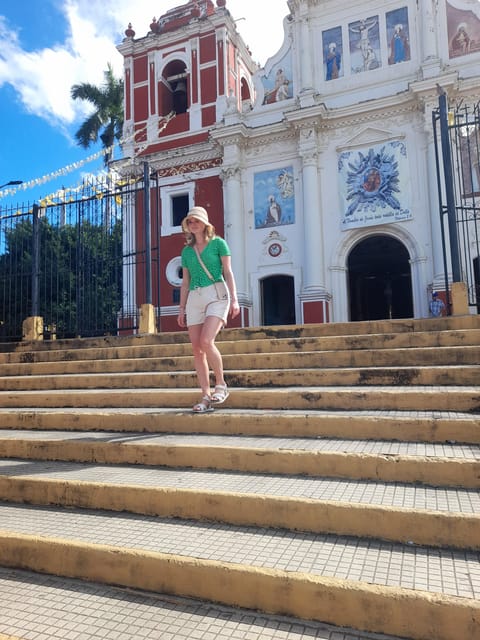
Leon city: Walking tour by our landmarks
walking_tourThe León City Walking Tour by Our Landmarks threads through the low-slung colonial grid of Nicaragua's intellectual capital, a city that smells of roasting cacao and wet plaster during the rainy season. León's cathedral, the largest in Central America, anchors the route: its white rooftop, accessible by stairs, spreads out like a bleached moonscape of domes and buttresses with views to Cerro Negro's dark cone on the horizon. The walk passes murals from the Sandinista era, their paint now sun-faded to soft pastels, and ducks into courtyards where bougainvillea drops petals onto cracked tile floors.
León's identity as a revolutionary university city gives it a grit and intellectual energy that polished Granada lacks, and this walk decodes the layers.
Insider tip: Wear socks you can slip on and off easily, as the cathedral rooftop walk requires removing shoes, and the white surface absorbs enough heat by midday to sting bare feet.

From Managua: León, Sandboarding Cerro Negro + Cathedral UNESCO
culturalFrom Managua: León, Sandboarding Cerro Negro and Cathedral UNESCO pairs Nicaragua's most adrenaline-heavy outdoor activity with its most culturally significant building. Cerro Negro is Central America's youngest volcano, a stark black cinder cone that rises from green farmland like a heap of charcoal, and sandboarding down its 40-degree slope means sitting on a thin wooden board and accelerating through loose volcanic gravel while the smell of sulfur rises from vents on either side of the run. The descent takes under two minutes but the hike up, roughly forty-five minutes of trudging through ankle-deep black ash with grit working into every seam of clothing, earns every second of it. The tour then pivots to León's UNESCO-listed cathedral, where the interior hush and the cool stone underfoot feel almost hallucinatory after the volcano's exposed, wind-battered ridge.
No other single day in Central America swings so hard between raw volcanic adventure and refined colonial architecture.
Insider tip: Bring a bandana or buff to cover your nose and mouth during the hike up Cerro Negro, as the fine volcanic ash kicks up with every footstep and coats your throat within minutes.
This month: May's early rains can compact the loose ash on Cerro Negro's slope, which increases board speed compared to the dry-season powder. Guides adjust technique briefings accordingly.

2 full days tour Granada + Lava+Leon area
day_tripThe 2 Full Days Tour Granada plus Lava plus León Area is the itinerary for travelers who refuse to choose between Nicaragua's two great colonial rivals. Day one works through Granada's painted facades and out onto Lake Nicaragua by boat, weaving among the isletas where howler monkeys crash through the canopy overhead and herons stand motionless in the shallows, then climbs to Masaya Volcano at nightfall when the crater's lava lake throws an orange glow visible from the rim. Day two relocates to León, sandboarding Cerro Negro's black slope in the morning and walking the cathedral quarter in the afternoon, the transition between cities revealing how Nicaragua's landscape shifts from lakeside lowland to volcanic highland in under two hours.
Two days, two cities, two volcanoes, and the full sweep of Nicaragua's Pacific lowland character without the logistical friction of self-organizing transfers.
Insider tip: Pack a dry bag for personal electronics on day one, as the isletas boat ride kicks up spray, and May's afternoon showers can catch the open lanchas mid-crossing.

Masaya Volcano Night Tour!!!
guided_experienceThe Masaya Volcano Night Tour isolates the single most dramatic moment in Nicaraguan travel: standing at the rim of Santiago crater after dark, looking straight down into a churning pool of molten rock. The access road climbs through dry tropical forest where the air thickens with sulfur the higher you go, and by the time you reach the parking area, the taste of it sits metallic on your tongue. At the crater's edge, the sound is what catches you first, a low, irregular rumble like distant thunder that never resolves, punctuated by the crack and hiss of gas escaping through fissures. The lava lake pulses orange and white below, its surface skinning over in dark plates that split apart to reveal fresh incandescence underneath.
Masaya is one of only a handful of volcanoes on Earth where you can observe an active lava lake from a paved overlook, and the night visit turns geology into spectacle.
Insider tip: Arrive in the first vehicle group of the evening shift, as the national park limits the number of cars at the crater simultaneously and later arrivals sometimes wait thirty minutes or more in a queue partway up the access road.
This month: May's afternoon rains usually clear by evening, and the post-storm air tends to be less hazy than the dry-season norm, which can improve visibility into the crater.

Granada Islets Boat Tour (The best in town)
cruiseThe Granada Islets Boat Tour launches from the marina south of Granada's center and threads through Las Isletas, a scattering of over three hundred small islands formed when Mombacho Volcano shed part of its cone into Lake Nicaragua thousands of years ago. The boat idles past islands barely larger than a living room, some topped with a single house and a mango tree, others thick with untouched forest where iguanas sun themselves on branches overhanging the water. The lake surface in the morning lies flat and glassy, reflecting Mombacho's green bulk, and the air carries the faintly vegetal smell of freshwater and decomposing hyacinth. Cormorants dry their wings on wooden posts, and the occasional fish eagle wheels overhead, its call a sharp, descending whistle that carries across the water.
The isletas compress Nicaragua's volcanic geography into miniature, and the boat ride through them is the most peaceful hour you will spend in the country.
Insider tip: Book the earliest morning departure, ideally before 9 AM, when the lake is calmest, the light is low and golden, and the bird activity along the shoreline is at its peak.
This month: Lake Nicaragua's water level begins rising in May with the onset of rains, which opens narrow channels between isletas that are too shallow to navigate during the dry months, giving early wet-season tours access to quieter, more secluded passages.
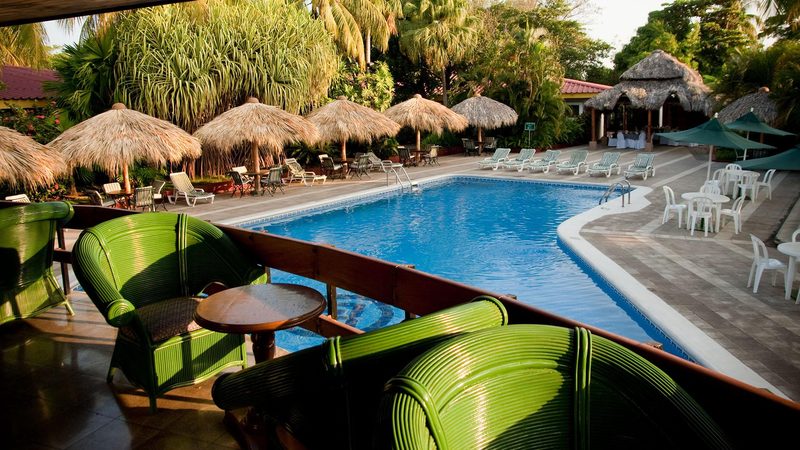
Where to Stay in Nicaragua in May
Hand-picked hotels across price tiers for May travellers.
Public Holidays in May
Dates that affect opening hours, transport and crowds
Labour Day
Observed nationwide as a public holiday.
Army Day
Observed nationwide as a public holiday.
Labour Day
Observed nationwide as a public holiday.
Army Day
Observed nationwide as a public holiday.
Packing Checklist
Bookmark this page — your progress is saved between visits
Need the full list with shopping links?
Climate-specific gear, brand recommendations, and what to leave at home.
View Nicaragua Packing List →Essential Tips
Insider knowledge and common pitfalls to avoid
Insider Knowledge
May rain on the Pacific side follows a reliable pattern. Mornings are clear and hot. Clouds build after noon. Downpours arrive between 2 and 4 PM. Locals plan around this. Markets open early. Construction crews start at dawn. Streets empty by mid-afternoon. Match this rhythm. You'll accomplish more than tourists who sleep until 9 and wonder why it always rains when they go out.
Nicaraguan food is underrated. Most travelers never get past gallo pinto and fried chicken. Seek out nacatamal, a massive steamed corn-dough parcel stuffed with pork, rice, potato, olives, and mint. It comes wrapped in banana leaf. Vendors sell them on weekend mornings from private homes that hang a small sign or flag by the door. The masa is slightly sweet. The filling is savory and dense. The banana leaf adds a faint green, vegetal note. Try vigorón in Granada. Try quesillo at roadside stands between Managua and León. Do not leave without these three.
May is the transitional month when Nicaragua's tourism workforce, in San Juan del Sur and the Corn Islands, catches its breath after the dry-season rush. Service slows sometimes. The people working are relaxed. They talk more. They recommend more. They share more. The best meal recommendations and off-trail hikes come from unhurried conversations.
Airport Córdoba exchange rates are significantly worse than in-town banks or ATMs. Withdraw cash from ATMs in Granada or León instead. Many smaller towns, on Ometepe and the Caribbean coast, are cash-only. Do not count on card readers working outside main tourist centers.
Avoid These Mistakes
Avoid booking every day in Managua. The capital has its moments. The old center near the lakefront has appeal. The large Mercado Oriental, reportedly the largest open-air market in Central America, is a maze of tin-roofed stalls where air hangs thick with grilling meat smoke and vendor shouts. But Managua in May is oppressive heat with limited tourist infrastructure. Use it for arrival and departure. Spend a night only if flight timing demands it. Then move on.
Do not underestimate travel times. Granada to León is only 90 km (56 miles). On Nicaraguan roads, with chicken buses, speed bumps, and occasional cows, it takes two to three hours. Ometepe adds a ferry crossing. The Corn Islands require a flight. Build more transit time into your itinerary than Google Maps suggests. Do not try to hit every region in one week.
Never ignore the sun because it is cloudy. May's overcast mornings feel deceptively mild. UV penetrates cloud cover at this latitude. First-timers burn badly on day two because day one felt cool enough to skip sunscreen. The burn announces itself at sunset. By then the damage is done. Apply sunscreen before leaving your room, every single morning.
Ready to plan your trip to Nicaragua?
Now that you've got the research covered, here's where to go next.
Explore More Activities in Nicaragua
Didn't see anything interesting yet?
Browse Viator's full catalog of tours, day trips, food experiences, and private guides in Nicaragua.
See All Nicaragua Tours on Viator