Things to Do in Nicaragua in October
October weather, activities, events & insider tips
Low Season · Budget Friendly
October Weather in Nicaragua
Long-run averages for October in Managua
87°F (30°C)
High Temp
71°F (22°C)
Low Temp
11.0 inches (279 mm)
Rainfall
84%
Humidity
11
Sunny-Day UV
⚠ Watch for flash flooding on unpaved roads and river crossings. This happens in the Matagalpa highlands and across Ometepe's interior. Never attempt a river ford during or immediately after heavy rain. Water levels rise fast. They recede slowly in October's saturated ground.
⚠ Mosquito-borne illness risk peaks during the wet season. Dengue and chikungunya are present throughout the Pacific lowlands. October's standing water after storms creates breeding habitat in every roadside puddle, discarded tire, and uncovered water tank. Use DEET repellent consistently. Sleep under a treated net if your accommodation lacks window screens. Wear long sleeves at dawn and dusk. These steps matter.
⚠ The Caribbean coast sits within the Atlantic hurricane belt. Direct landfalls on Nicaragua are uncommon. Peripheral tropical storm activity can produce dangerous seas, coastal flooding, and travel disruptions with limited advance warning. Monitor forecasts closely if you plan to visit the Corn Islands or Bluefields. Check daily. Plan ahead.
Making the most of October in Nicaragua? Browse tours and activities in Nicaragua on GetYourGuide.
Is October Right for You?
Weigh the advantages and considerations before booking
Advantages
- + October marks the absolute bottom of Nicaragua's tourism calendar. Prices for accommodation, transport, and guided tours hit their lowest point of the year. Rooms in Granada and León that need advance booking in February suddenly have same-day availability. The savings are substantial. They can turn a backpacker budget into a boutique-level trip.
- + The Pacific coast receives its most consistent south and southwest swells of the year. Warm-water surf at Playa Maderas and Playa Remanso draws experienced board riders from across Central America. Water temperatures hover near 28°C (82°F). Mornings tend to be offshore and glassy. Low-season crowds mean you may surf a break entirely alone on a weekday.
- + Every landscape in Nicaragua reaches peak green in October. Volcanic slopes look upholstered in dense tropical forest. Coffee plants on the northern highland fincas are flowering. The country's waterfalls, including Cascada San Ramón on Ometepe's Volcán Maderas, hit full force. Post-storm light and dramatic cloud formations produce photographic conditions dry-season visitors never see.
- + Major sites feel intimate rather than overrun. Granada's Calle La Calzada, Masaya's craft market, even Masaya Volcano's crater-rim platform. October's thin tourist numbers mean smaller groups, less jostling, and a genuine sense of having arrived somewhere rather than queuing through it.
Considerations
- − October is Nicaragua's wettest month by a clear margin. Managua averages 279 mm (11.0 inches). Storms typically build in the afternoon rather than lasting all day. The downpours can be genuine tropical deluges. They turn streets into rivers for an hour. Open-air dining becomes a gamble after noon.
- − Unpaved roads in the highlands around Matagalpa and across Ometepe's interior deteriorate into mud tracks during peak rainfall weeks. Travel times sometimes double. Routes close entirely. If your itinerary depends on reaching remote areas, you need a four-wheel-drive vehicle and flexible timing.
- − The Caribbean coast, including the Corn Islands, falls within the Atlantic hurricane belt. Direct landfalls are uncommon. Rough seas cancel panga boat services from Bluefields with frustrating regularity. Small-plane flights from Managua are more reliable. They book up the moment boats stop running.
Short on time in October? See day trips around Nicaragua on GetYourGuide.
Best Activities in October
Top things to do during your visit
October sits at the peak of Nicaragua's rainy season. The country receives more precipitation this month than any other. Afternoon downpours roll in with theatrical force. The sky darkens to a bruised grey. Warm rain hammers corrugated rooftops. Cobblestone streets become shallow rivers. They drain almost as quickly as they fill. Mornings break clear and steamy. Temperatures climb toward 87°F by midday. They rarely drop below 71°F after dark. The air carries the mineral tang of wet volcanic soil. The landscape responds with reckless lushness. Hillsides around Catarina glow electric green. Bougainvillea spills over colonial walls in Granada. Lowland forests near León thicken into dense canopies. Sunlight filters through in scattered coins. This is not high season. International arrivals thin out considerably. Boats threading through Las Isletas run lighter. Cathedral naves echo with fewer voices. Local guides have time to linger at overlooks. They don't herd groups on fixed schedules. Nicaraguans settle into a slower rhythm during the rains. They eat vigorous soups of indio viejo. They drink warm pinolillo sweetened with cacao while storms pass. Street vendors adjust their hours. They fire up grills in cooler late afternoons. Clouds break. Volcanoes reappear against pink-streaked skies. For travelers willing to carry a rain jacket and plan around daily weather patterns, October delivers something the dry season cannot. The country at its most fertile and least performative. Genuine solitude at landmarks that would feel crowded in January or February. The practical rhythm is straightforward. Schedule outdoor excursions for morning hours. Skies are typically clearest then. Carry waterproof bags for electronics. Bring a lightweight layer for cooler evenings. Roads between cities remain passable. Rural routes can slow down. Build buffer time into multi-stop itineraries. The reward? A Nicaragua that feels unhurried and itself. The food is richer. The greens are deeper. Volcanic landscapes wear a cloak of low cloud. They look primordial.

Best of Granada, Mirador de Catarina and Masaya Volcano Tour
guided_experienceThis full-day circuit stitches together three defining landscapes in a single outing. You begin in Granada. Morning light hits the ochre and terracotta facades of Calle La Calzada. The smell of wood-fired tortillas drifts from doorways along the central market. From there, the road climbs to Mirador de Catarina. This viewpoint perches above Laguna de Apoyo. The crater lake sits still and blue against surrounding jungle. It looks painted. The tour culminates at Masaya Volcano. You stand at the rim of Santiago crater. You peer into an active vent. Sulfurous haze stings your nostrils. The rumble of shifting magma is audible beneath your feet.
It compresses Granada's colonial streetscape, a volcanic crater lake, and an active magma vent into a single guided day. It covers ground that would take independent travelers two or three days of logistics.
Insider tip: Ask your guide to stop at one of the artisan workshops in Catarina village before the mirador. Families shape black clay pottery by hand there. They sell pieces for far less than Granada souvenir shops charge.
This month: October's heavy rainfall can shroud the Catarina viewpoint in low cloud by midday. The early-morning window for clear views over Laguna de Apoyo is more critical than in drier months.
Leon city: Walking tour by our landmarks
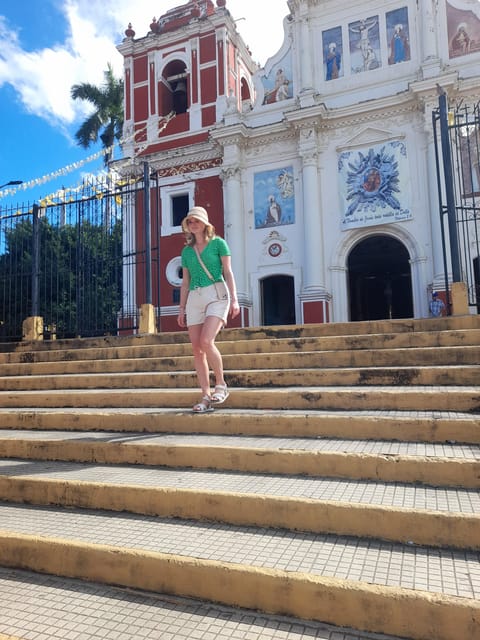
walking_tourLeón sprawls flat and hot beneath a ring of volcanoes. Its grid of low colonial buildings is interrupted by churches so massive they seem to belong to a city ten times the size. This walking tour threads through the historic centre on foot. It passes Basílica de la Asunción, the largest cathedral in Central America. You can walk across its whitewashed roof in bare feet. The tile radiates stored heat. The city develops in every direction below. The route dips into side streets. Revolutionary murals blaze in primary colours across entire building facades. The paint cracks in the tropical air. The sharp scent of roasting cacao wafts from small-batch chocolate producers.
León's political and artistic history is layered into its walls. A local guide decodes the murals, bullet scars, and cathedral engineering that you would walk past without context.
Insider tip: Wear shoes with good grip if you plan to climb the cathedral roof. The whitewashed surface can be slippery after rain. Go before 10 AM. The tiles are still cool enough to stand on comfortably then.

From Managua: León, Sandboarding Cerro Negro + Cathedral UNESCO
culturalCerro Negro is a young, jet-black cinder cone. It rises from lowland scrub northwest of León like a slag heap from another planet. This day trip from Managua pairs the volcano with León's UNESCO-listed cathedral. The headliner is the descent. You climb roughly 45 minutes up loose volcanic gravel. It crunches and shifts under every step. Wind carries fine black grit that coats your lips and teeth. Then you sit on a wooden board at the summit. You slide down the slope at speeds that blur the world into a streak of charcoal and sky. The black sand is warm to the touch, even through your jumpsuit. Friction generates a low hiss that builds as you accelerate.
Sandboarding down an active volcano is one of the few singular adventure activities in Central America. Pairing it with León's cathedral makes the day feel earned on both the adrenaline and cultural register.
Insider tip: Wear closed-toe shoes you do not mind ruining. Bring a bandana or buff to cover your nose and mouth during the climb. The fine volcanic dust is persistent. Wind at the summit blows hard.
This month: October rain can make the volcanic gravel heavier and slower. This appeals to first-timers who want a more controlled descent. Experienced boarders may find drier months faster.

2 full days tour Granada + Lava+Leon area
day_tripThis two-day itinerary covers the geographic and sensory range of western Nicaragua in compressed format. Day one anchors in Granada. Colonial architecture lines streets narrow enough that you can hear conversations from balconies above. It extends to the volcanic rim at Masaya. After dark the crater glows dull, pulsing orange reflected against sulphur clouds. Day two shifts to León and its surrounding volcanic landscape. It trades Granada's ornate churches for León's raw, politically charged streetscape. It trades them for the stark, treeless flanks of the Maribios volcanic chain. The contrast between the two cities is the point. Granada is the colonial jewel. León is the revolutionary nerve centre. The volcanoes between them remind you that this entire stretch of land is geologically temporary.
It solves the most common Nicaragua logistics problem. It fits both Granada and León into a guided two-day sweep with volcano access included. You spend time experiencing rather than arranging transport.
Insider tip: Pack a headlamp for the Masaya night visit. Do not rely on your phone light. The crater rim is dark. The footing is uneven. You want both hands free.

Masaya Volcano Night Tour!!!
guided_experienceAfter dark, Masaya Volcano transforms. The daytime view of a grey, smoking crater gives way to something far more visceral. A churning pool of molten rock is visible from the rim. It casts an amber glow upward that lights the underside of the gas plume. It turns the faces of everyone at the railing warm copper. The heat radiates in waves you can feel on your forearms. The sound is a deep, arrhythmic gurgling. Occasional cracks punctuate it as crust on the lava surface splits and re-forms. The park limits night visits to timed slots. Your group stands at the crater edge for a fixed window. This concentrates the experience into an intense, focused encounter. It is not a casual wander.
Staring into an active lava lake at night is one of those travel moments that rewires your sense of scale. Nicaragua is one of very few places on earth where you can do it with a short drive from a major city.
Insider tip: Position yourself at the far left end of the viewing platform. The angle into the crater tends to offer a wider view of the lava surface there. Sulfur fumes blow away from you rather than into your face.
This month: October's cloud cover can occasionally obscure the crater glow from a distance. At the rim itself, visibility into the vent is unaffected by weather. You are looking down, not across.

Granada Islets Boat Tour (The best in town)
cruiseLake Nicaragua's southern shore near Granada fractures into Las Isletas. This archipelago holds over 350 tiny islands. They formed when Mombacho Volcano erupted. Its debris scattered into the water. A boat tour threads through narrow channels. The water is warm, tea-coloured, and so calm that reflections of the islands look more solid than the islands themselves. Howler monkeys bark from ceiba trees overhead. Herons stand motionless on half-submerged roots. Occasional splashes of freshwater fish breaking the surface punctuate the quiet. Some islands hold a single house with a dock and a hammock. Others are barely large enough for the trees growing on them. The boat passes close enough that you can smell the damp earth. You can smell the sweet rot of fallen fruit on uninhabited islets.
The islets feel like a flooded forest more than a lake. The boat ride has a completely different texture of Nicaragua than the volcanoes and colonial cities. It is all within twenty minutes of Granada's central park.
Insider tip: Bring binoculars rather than relying on your phone camera for the birdlife. The boat rocks enough to make telephoto phone shots blurry. The birds along far channels are often too distant for a casual snap.
This month: October's high water levels mean the boat channels between islets are deeper and wider. This allows access to passages that can be too shallow in the dry season.
Where to Stay in Nicaragua in October
Hand-picked hotels across price tiers for October travellers.
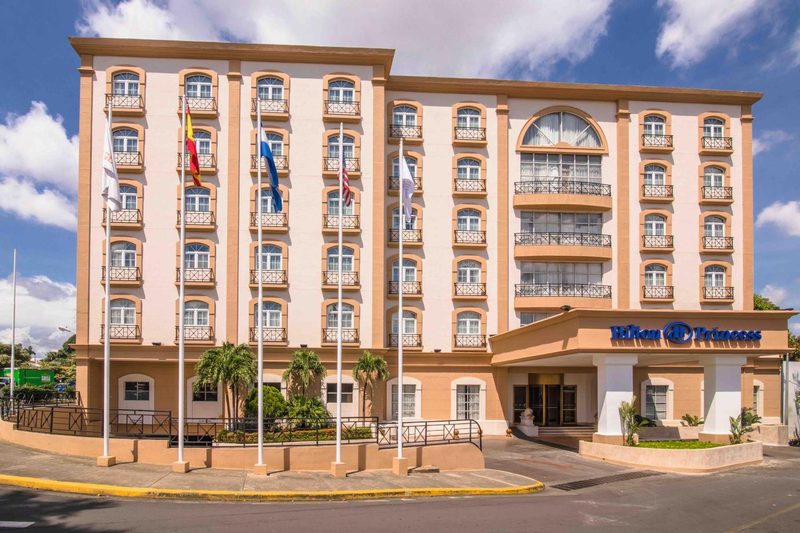
Public Holidays in October
Dates that affect opening hours, transport and crowds
Indigenous Resistance Day
Observed nationwide as a public holiday.
Indigenous Resistance Day
Observed nationwide as a public holiday.
Indigenous Resistance Day
Observed nationwide as a public holiday.
Packing Checklist
Bookmark this page — your progress is saved between visits
Need the full list with shopping links?
Climate-specific gear, brand recommendations, and what to leave at home.
View Nicaragua Packing List →Essential Tips
Insider knowledge and common pitfalls to avoid
Insider Knowledge
Morning is your golden window. October's storms build in the afternoon. The hours between 6 AM and noon stay clear, cooler, and good for anything outdoors. Schedule every hike, boat trip, and beach visit before lunch. Let the afternoon rain drive you into covered markets. Visit one of Leon's revolutionary history museums. Settle for a long lunch under a tin roof with a cold Tona beer. Listen to the downpour hammer the corrugated metal overhead.
The vigoron from vendors inside Masaya's Mercado de Artesanias may be Nicaragua's most satisfying street meal. It comes as a banana-leaf cone of boiled yuca, crunchy chicharrones with fat still glistening at the edges, and curtido, a vinegar-soaked cabbage slaw whose sharp tang cuts through October's thick humidity. Eat standing at the counter. Chase it with a bag of tiste, a cold cacao-and-toasted-corn drink you will not find outside this country.
Seek out the evening fritanga. These street-corner barbecue setups appear outside private homes, marked only by a smoking plancha and a bare lightbulb. This is the meal you will eat most often. Most guidebooks skip it entirely. Look for plancha-grilled chicken with skin that crackles and blackens at the edges. Look for fried green plantains called tajadas. Look for gallo pinto re-fried in pork fat until the rice turns crispy and nutty. Wash it down with pinolillo, a gritty corn-and-cacao drink that is effectively the national beverage. It tastes like liquid roasted earth.
Nicaragua remains one of the most affordable countries in the Americas. October's low season stretches that advantage further. Budget travelers can upgrade meaningfully. Your accommodation, meals, and guided tours here cost a fraction of what comparable experiences run across the border in Costa Rica. The quality gap between the two countries has narrowed considerably in recent years. Carry cash in cordobas for markets and small towns. Card acceptance outside Granada and Managua is spotty.
Avoid These Mistakes
Avoid booking the Corn Islands without checking Caribbean weather forecasts first. October sits in hurricane season. Direct landfalls on Nicaragua are rare. Peripheral storm activity generates swells that cancel panga boat services from Bluefields for days at a time. The small-plane flights from Managua are more reliable. They fill up immediately when boats stop running. If the Caribbean coast is non-negotiable, book your flights early. Build in buffer days.
Do not treat the first afternoon downpour as a signal to retreat to the hotel. First-time visitors to the tropics often lose entire afternoons this way. October's storms in Nicaragua typically blow through in one to three hours. Locals carry on. Markets stay open. Fritanga grills keep smoking. The post-storm light, when everything steams and the air smells of wet earth and frangipani, is when the country looks its most photogenic. Bring your rain jacket. Keep moving.
Do not pack only flip-flops. They will not work everywhere. Granada's cobblestones turn slick with rain. Cerro Negro's volcanic gravel demands grip. Ometepe's forest trails run with mud. You need at minimum one pair of closed-toe shoes with real traction. Twisted ankles are the most common tourist injury during Nicaragua's wet season. They will ruin a trip faster than any rainstorm.
Ready to plan your trip to Nicaragua?
Now that you've got the research covered, here's where to go next.
Explore More Activities in Nicaragua
Didn't see anything interesting yet?
Browse Viator's full catalog of tours, day trips, food experiences, and private guides in Nicaragua.
See All Nicaragua Tours on Viator