Things to Do in Nicaragua in July
July weather, activities, events & insider tips
Low Season · Budget Friendly
July Weather in Nicaragua
Long-run averages for July in Managua
87°F (30°C)
High Temp
72°F (22°C)
Low Temp
5.7 inches (145 mm)
Rainfall
77%
Humidity
12
Sunny-Day UV
⚠ Flash flooding risk on unpaved rural roads after heavy afternoon downpours, in the northern highlands and on the roads south of San Juan del Sur. Do not attempt river crossings in a vehicle during or immediately after storms.
⚠ Pacific coast riptides strengthen with the rainy-season swells. Playa Maderas and other surf beaches lack lifeguards, and the currents that make the waves rideable also make casual swimming dangerous for inexperienced swimmers. Swim only where you see locals swimming.
⚠ Dengue risk spikes in Nicaragua's lowlands during rainy season. Daily storms leave standing water everywhere. The Aedes aegypti mosquito bites in daylight. Not just at dusk. Pack DEET repellent. Wear long sleeves after 4 PM. Choose rooms with screens or AC. These steps matter. Ignore them and you will pay.
Making the most of July in Nicaragua? Browse tours and activities in Nicaragua on GetYourGuide.
Is July Right for You?
Weigh the advantages and considerations before booking
Advantages
- + July sits inside the canícula, a short dry window that opens mid-rainy season and stretches into August. Mornings stay clear and warm. Afternoon storms roll through fast, rarely lasting an hour. Managua collects 5.7 inches (145 mm) monthly, barely two-thirds of June's total. The Pacific lowlands mirror this pattern.
- + Tourist numbers hit their yearly low. Granada's colonial plazas, León's cathedral rooftops, Ometepe's trails. These places feel like they belong to locals again. Room rates drop. Tour operators who turn away business in February suddenly negotiate on group size and timing.
- + The landscape peaks now. Volcanoes that looked brown in March turn deep green. Dry-season trickles become roaring waterfalls. The coffee highlands around Matagalpa and Jinotega grow almost impossibly lush. The air carries wet earth and flowering shade trees.
- + Pacific swells build through July. San Juan del Sur sees consistent breaks. Playa Maderas and Playa Remanso suit intermediate riders well. Water temperature hovers at 27°C (81°F). Boardshorts suffice.
Considerations
- − Afternoon rain arrives almost daily, usually between 1 PM and 4 PM. Heavy bursts flood unpaved streets and turn rural roads to mud. Driving between cities on secondary routes? Add buffer time. Expect delays. The paved highways linking Managua, Granada, León, and San Juan del Sur stay solid. Roads to remote communities and highland coffee farms do not.
- − The Caribbean coast, Corn Islands included, faces rougher seas. La Costeña's prop planes from Managua occasionally cancel. Big Corn and Little Corn as your main draw? July means gambling on logistics.
- − Mosquitoes explode with standing water. Dengue transmission peaks during rainy months. This is real. Long sleeves at dusk, DEET repellent, screened windows or air conditioning. These are necessities, not extras.
Short on time in July? See day trips around Nicaragua on GetYourGuide.
Best Activities in July
Top things to do during your visit
July lands you in Nicaragua's green season. The Pacific lowlands get 5.7 inches of rain. Afternoon skies open with theatrical downpours that rarely last more than an hour. Mornings start warm and clear, with highs reaching 87°F. The lushness beats the scorched dry months of January through April. The volcanoes ringing Managua and Granada wear thick crowns of cloud by midday. Sugarcane fields along the Pan-American Highway glow an almost fluorescent green. The air carries the mineral smell of wet volcanic soil mixed with woodsmoke from roadside fritangas. This is not the Nicaragua of postcard-blue skies and bone-dry heat. It is a country at its most alive. Its rivers run full. Its markets heave with pitahaya and jocote. Travelers who arrive in July find a country largely free of foreign crowds. Hotel rates drop. Tour operators negotiate. The beaches along the southern Pacific coast from San Juan del Sur to Playa Maderas belong mostly to surfers and local families on weekend escapes. The rain patterns follow a reliable rhythm. Clear mornings surrender to clouds around noon. A hard shower sweeps through between two and four in the afternoon. By evening the air cools to the low seventies. The streets of Granada and León fill again with the clatter of rocking chairs on tile porches and the sizzle of carne asada over charcoal. Nicaragua's food culture is built around these evening hours. Families gather at comedores. The tang of pickled cabbage and the earthy sweetness of fresh tortillas pressed on a comal define the close of every day. Safety for travelers remains straightforward in the main tourist corridors of Granada, León, and the southwestern beaches. The infrastructure is well established. Locals are accustomed to visitors. Getting between cities is easiest by private shuttle or pre-arranged transport. The rain can slow public bus routes through the highlands. For anyone weighing the best time to visit Nicaragua, July has a compelling argument: lower costs, greener scenery, and the rare pleasure of experiencing a country between seasons, neither baked nor flooded, with September and October's heavier rains still months away.

Best of Granada, Mirador de Catarina and Masaya Volcano Tour
guided_experienceThe Best of Granada, Mirador de Catarina and Masaya Volcano Tour condenses three of Nicaragua's essential Pacific-side experiences into a single guided day. The route begins in Granada's colonial core. You walk streets lined with crumbling pastel facades and churches whose bells have been ringing since the sixteenth century. The interior air is cool and smells of old stone and candle wax. From there, the tour climbs to the Mirador de Catarina, a volcanic-rim lookout where the Laguna de Apoyo spreads below like a disc of hammered jade. It finishes at Masaya Volcano's Santiago crater. You peer over the edge into a vent that glows with molten rock and smells sharply of sulfur.
Three landscapes in one day, from colonial streetscapes to a crater lake panorama to the raw heat of an active lava vent, with a guide who connects the geology to the culture built on top of it.
Insider tip: Request the afternoon-to-evening departure if your operator offers one. You will reach Masaya Volcano at dusk when the lava glow intensifies against the darkening sky. The daytime haze clears from the Catarina viewpoint.
This month: July's cloud cover can obscure the Catarina viewpoint by early afternoon. The rain-fed vegetation around the lagoon is at its most vivid green. The volcanic gases at Masaya crater tend to vent more dramatically in the humid air.
Leon city: Walking tour by our landmarks
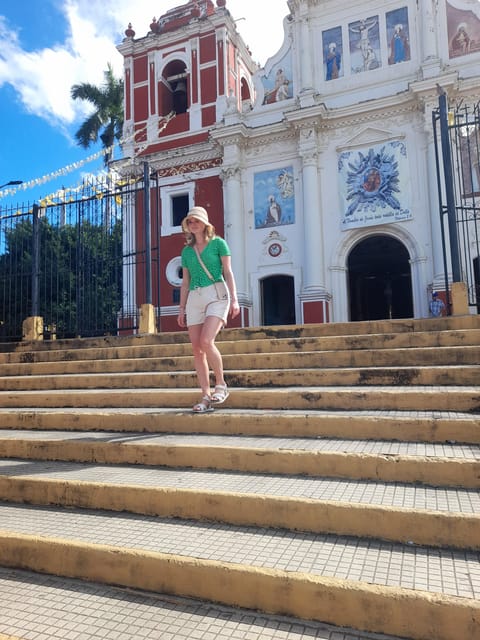
walking_tourThe León city Walking Tour by Our Landmarks takes you through the streets of Nicaragua's intellectual capital. It is a university city where the walls are layered with political murals in fading reds and blues. The cathedral, a UNESCO World Heritage site, anchors a central plaza that smells of roasting corn from the vendors stationed at its edges. Your guide narrates the route through the Rubén Darío museum. You see the Subtiava indigenous quarter where pre-colonial history survives in church iconography and street names. You climb to the rooftop of the cathedral itself. You walk across whitewashed domes with views stretching to the smoking cone of Cerro Negro and the Pacific beyond. The cobblestones underfoot are uneven, worn smooth by centuries of foot traffic. The heat of León, set in a low plain, is the most intense of any Nicaraguan city.
León's revolutionary history and literary heritage are inseparable from its architecture. A guided walk decodes the murals, monuments, and street corners that a solo visitor would pass without understanding.
Insider tip: Go early. Ideally by eight in the morning, before León's pavement begins radiating heat. Bring a bottle of water. Wear shoes with grip for the cathedral rooftop, which can be slippery after rain.
This month: July afternoon rains can make León's streets temporarily impassable at intersections where drainage is poor. The cathedral rooftop walk may close briefly during thunderstorms.

From Managua: León, Sandboarding Cerro Negro + Cathedral UNESCO
culturalFrom Managua: León, Sandboarding Cerro Negro + Cathedral UNESCO pairs the cerebral pleasures of León's colonial core with the adrenaline of hurtling down an active volcano on a wooden board. Cerro Negro is Central America's youngest volcano. It is a stark black cinder cone that rises from the surrounding green farmland like a pile of charcoal dropped from the sky. You hike roughly forty-five minutes up loose scoria that crunches and shifts under your boots. The sulfurous smell sharpens as you near the rim. Then you sit on a plywood board, goggles on, and slide down the slope at speeds that can reach fifty miles per hour. Volcanic grit sprays your legs. The wind roars past your ears. The return to León for a guided tour of the cathedral and its rooftop provides a tonal counterpoint: cool stone interiors, the echo of your footsteps in the nave, and a panoramic walk across the building's white domes.
No other place on earth lets you sandboard down an active volcano and then, an hour later, stand on the roof of a four-hundred-year-old cathedral looking back at the slope you just descended.
Insider tip: Wear long pants and closed shoes for the Cerro Negro descent. The volcanic gravel will sandblast exposed skin. The rental jumpsuits offered at the base fit poorly. Bringing your own thin long-sleeved layer makes the ride more comfortable.
This month: Rain in July can make the Cerro Negro surface heavier and slower for sandboarding. Operators typically still run the tour. Speeds are lower on wet scoria. The hike up is more physically demanding when the loose rock is damp.

2 full days tour Granada + Lava+Leon area
day_tripThe 2 Full Days Tour Granada + Lava + León Area is the most complete Nicaragua sampler available. It stitches together the country's two great colonial cities with a night visit to Masaya's lava-lit crater and a run down Cerro Negro. Day one moves through Granada's churches and markets. The smell of cacao and fresh cheese mingles in the Mercado Municipal. Then you go up to Masaya Volcano after dark. The crater's orange glow reflects off the sulfur clouds. The heat rising from the vent warms your face even from the observation platform. Day two shifts north to León. You trade Granada's lakeside calm for the rawer energy of a city built on revolution and poetry. It finishes with the physical rush of Cerro Negro's volcanic slope.
Two days, two cities, two volcanoes, and the full arc of Nicaraguan culture from Granada's merchant elegance to León's radical intellectual tradition.
Insider tip: Pack a headlamp for the Masaya Volcano night visit. The parking area and walkway are lit. Having your own light makes the path back more comfortable. You will want both hands free for photos at the crater rim.
This month: The two-day format works well in July because it builds in natural buffer time for afternoon rain delays. If a shower pauses the Cerro Negro hike, the schedule has room to wait it out.

Masaya Volcano Night Tour!!!
guided_experienceThe Masaya Volcano Night Tour takes you to the rim of Santiago crater after dark. The experience shifts from geological curiosity to something closer to spectacle. You stand at a railing above an active lava lake. The molten rock pulses orange and red below. It throws enough light to illuminate the sulfur-stained walls of the crater and cast your shadow behind you. The heat is palpable on your face and hands even from the viewing platform. The sound is a low, continuous rumble punctuated by the crack of gas bubbles breaking the surface. The smell of sulfur is intense, sharp enough to sting your nostrils. The drive back to Granada or Managua afterward feels like reentering the ordinary world after a visit somewhere profoundly strange.
One of the only places on Earth where you can stand safely above a glowing lava lake at night, close enough to feel its heat and hear the magma churn.
Insider tip: The national park limits viewing time at the crater rim. Arrive with your camera settings already configured for low light. A wide-angle lens on a high ISO captures both the lava glow and the crater walls in a single frame.
This month: July's cloud cover and humidity can increase the density of the sulfur plume over the crater, occasionally obscuring the lava view. Patience usually rewards: the wind shifts, the plume parts, and the glow returns.

Granada Islets Boat Tour (The best in town)
cruiseThe Granada Islets Boat Tour cruises through Las Isletas. It is a scattering of more than three hundred tiny islands formed by an ancient eruption of Mombacho Volcano. They sit in the shallows of Lake Nicaragua just minutes from Granada's waterfront. The boat threads between islands fringed with mango and ceiba trees. Some hold a single house with a dock and a hammock. Others home nothing but herons, cormorants, and howler monkeys whose guttural calls carry across the flat water. The lake surface reflects the green of the islands and the grey of Mombacho's cloud-wrapped summit. The air smells of lake water and wet vegetation. You pass a Spanish-era fortress built on one of the larger islands. Its stone walls are now softened by moss and creeping vines. If the timing is right, your boatman will cut the engine in a quiet channel where the only sounds are birdsong and the lap of water against the hull.
A boat ride through hundreds of volcanic islands where the wildness of Lake Nicaragua meets the quiet domesticity of families living on fragments of land barely larger than their houses.
Insider tip: Sit at the front of the boat for the best views and the least engine noise. Bring binoculars for the birdlife, in the quieter channels away from the main tour route, where kingfishers dive from overhanging branches.
This month: July's higher lake levels from the rainy season mean the boat can navigate narrower channels between the islets that are too shallow in the dry months, opening routes closer to the bird-nesting trees.
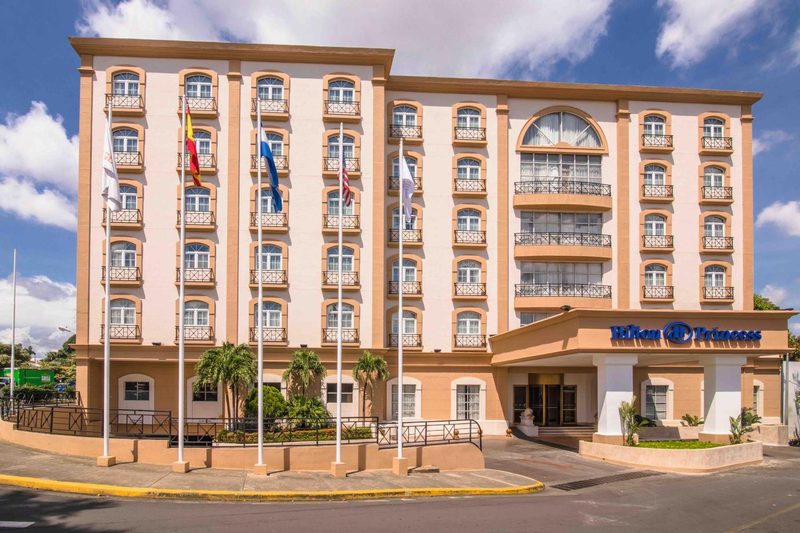
Where to Stay in Nicaragua in July
Hand-picked hotels across price tiers for July travellers.
Public Holidays in July
Dates that affect opening hours, transport and crowds
Liberation Day
Observed nationwide as a public holiday.
Liberation Day
Observed nationwide as a public holiday.
Packing Checklist
Bookmark this page — your progress is saved between visits
Need the full list with shopping links?
Climate-specific gear, brand recommendations, and what to leave at home.
View Nicaragua Packing List →Essential Tips
Insider knowledge and common pitfalls to avoid
Insider Knowledge
Learn the canícula. It is the single most useful piece of weather knowledge for a July trip. Central America's rainy season is not uniform: a relative dry spell typically settles in around mid-July and lasts into August, dropping rainfall noticeably below the June and September peaks. Locals call it the veranillo de San Juan, and it is the reason July mornings in the Pacific lowlands are often cloudless while June mornings are already grey. Plan outdoor activities for the first half of the day and keep afternoons flexible.
Nicaraguan food in July leans into what the rains produce. Market stalls in Granada's Mercado Municipal and Managua's Mercado Oriental overflow with mangoes, pitahaya, and jocote, and the nacatamales sold on weekend mornings from home kitchens announced only by a hand-lettered sign, banana-leaf bundles of corn masa stuffed with pork, rice, potato, and olives, steamed for hours, are the meal worth building a morning around. Vigorón, the Granada street dish of boiled yuca topped with chicharrón and curtido, a sharp cabbage slaw dressed with vinegar and chili, is served on banana leaves at tables around Parque Central and tastes like the city itself: simple ingredients, exact proportions, and no interest in impressing anyone.
The Pacific coast beaches near San Juan del Sur that require dirt-road access, like Playa Maderas and Playa Hermosa, get significantly muddier in July. A four-wheel-drive vehicle is not a suggestion. Standard sedans get stuck on the hill above Maderas with predictable regularity, and the tow out is neither cheap nor quick. If you are not renting a 4x4, use the shuttle services that run from town.
León's cathedral, the largest in Central America, offers rooftop access where you walk across the whitewashed domes and turrets above the city. In July the rooftop is nearly empty. The heat radiating off the white surface is intense in late morning, so go early. But the view of the Maribios volcanic chain with clouds building behind the peaks is the kind of thing that makes you understand why the Spanish built the cathedral exactly here.
Avoid These Mistakes
Do not assume rain means the day is ruined. July storms in Nicaragua follow a pattern as reliable as a bus schedule: clear mornings, cloud buildup around noon, hard rain from roughly 1 PM to 3 PM, then a slow clearing that often produces the best light and most comfortable temperatures of the day. Travelers who sleep in and start their day at 10 AM lose the best window. Travelers who start at 6 AM get five solid hours before the first drops.
Do not pack for one climate. Nicaragua spans sea-level Pacific beaches, highland coffee country above 1,200 m (3,937 ft) around Matagalpa and Jinotega where mornings are cool enough for a fleece, and the humid Caribbean coast which operates on its own weather system entirely. A July day in Granada at 60 m (197 ft) elevation and a July day in Jinotega at 1,004 m (3,294 ft) are not the same experience.
Do not skip Managua entirely. The capital has a rough reputation that is mostly earned. But the lakeshore malecón at sunset, the old cathedral ruins left standing since the 1972 earthquake, and the food at the comedores in the Mercado Roberto Huembes are worth a half-day stopover rather than the immediate taxi transfer to Granada that most guidebooks recommend. Revolution Day on July 19 makes the case even stronger.
Ready to plan your trip to Nicaragua?
Now that you've got the research covered, here's where to go next.
Explore More Activities in Nicaragua
Didn't see anything interesting yet?
Browse Viator's full catalog of tours, day trips, food experiences, and private guides in Nicaragua.
See All Nicaragua Tours on Viator