Things to Do in Nicaragua in March
March weather, activities, events & insider tips
Shoulder Season · Good Value
March Weather in Nicaragua
Long-run averages for March in Managua
92°F (33°C)
High Temp
71°F (21°C)
Low Temp
0.1 inches (3 mm)
Rainfall
58%
Humidity
13
Sunny-Day UV
⚠ Agricultural burning across the Pacific lowlands from February through April creates periodic haze that can reduce visibility and irritate airways, most noticeably near the sugarcane-growing flatlands around Chinandega and the outskirts of León. Travelers with respiratory sensitivities should carry appropriate medication and may want to time longer outdoor excursions for the northern highlands or Caribbean slope, where burning is far less common.
⚠ Managua records a peak UV index of 13 on clear March days, among the most extreme readings in the Western Hemisphere. Unprotected skin can burn in under 15 minutes during the midday window. Treat high-SPF sunscreen and a wide-brimmed hat as non-negotiable daily gear, and reapply sunscreen after any water activity or heavy sweating.
Making the most of March in Nicaragua? Browse tours and activities in Nicaragua on GetYourGuide.
Is March Right for You?
Weigh the advantages and considerations before booking
Advantages
- + March is Nicaragua's driest month. Managua sees just 3 mm (0.1 inches) of rain. Trails stay bone-dry. Dirt roads between towns hold firm. You can commit to outdoor plans with near-total confidence that weather will not wreck them. Compare that to October's 279 mm (11 inches) deluge. The difference is not subtle.
- + Semana Santa falls in late March 2027. Nicaragua's Holy Week celebrations rank among Central America's most visually intense religious observances. León's sawdust carpet artistry, Granada's candlelit processions through colonial streets, and the all-night vigils in parish churches across the highlands transform a beach-and-volcano trip into something culturally heavier. Hard to forget.
- + Water clarity peaks during the dry months. Lake Nicaragua's channels around Las Isletas run calm and relatively clear for paddleboarding. San Juan del Sur's Pacific swells arrive groomed by consistent offshore winds. Somoto Canyon's river drops low enough to wade through turquoise narrows. By June, those same narrows become chest-deep torrents.
- + Outside of Semana Santa week itself, March sits at the tail end of high season. The December-through-February wave of North American and European visitors has thinned. Lines at Masaya Volcano's crater viewing platform shorten slightly. You gain more room to negotiate on accommodation in Granada's colonial center. Dry-season weather arrives with a fraction of January's crowd pressure.
Considerations
- − The heat is unrelenting. Managua's 33°C (92°F) average high ranks among the year's worst. It lands on a landscape with limited natural shade. Volcanic terrain, paved colonial plazas, and open Pacific beaches all radiate stored warmth well past sundown. By afternoon, the stone sidewalks of Granada and León grow hot enough to feel through shoe soles. Air conditioning outside higher-end accommodations is not guaranteed.
- − Months of zero rainfall strip the Pacific lowlands of any tropical lushness. The terrain between Managua and León turns brown and brittle. Cattle graze on dust. Roadside vegetation looks more like dry savanna than the postcard rainforest image most first-timers carry. Only the highland cloud forests on Maderas volcano and the Caribbean slope retain deep green. March will disappoint jungle seekers.
- − Semana Santa week (roughly March 21-28 in 2027) sends domestic and regional travel surging into León and Granada. Room prices jump. Popular activities like the Masaya Volcano night tours book solid. Colonial-city streets fill with Nicaraguan families on holiday. The same event that makes late March culturally electric also makes it logistically demanding. Plan ahead.
Short on time in March? See day trips around Nicaragua on GetYourGuide.
Best Activities in March
Top things to do during your visit
March lands squarely in Nicaragua's dry season, and you feel it the moment you step off the plane in Managua. The air is fierce and still, with average highs reaching 92°F and barely a trace of rain, just 0.1 inches across the entire month, the driest stretch on the calendar. Hillsides that will turn emerald green come June are baked tawny gold, and the volcanic soil cracks underfoot on trails around Masaya and Cerro Negro. Smoke from agricultural burns mingles with the sulfur drifting off active craters, giving the Pacific lowlands a haze that softens sunsets into long, copper-colored affairs. Lake Managua throws back the light like hammered tin. It is, by any measure, the season to be outdoors in Nicaragua, and every local knows it. The dryness shapes daily life in ways that go beyond comfort. Colonial cities like Granada and León hold their heat in thick adobe walls, and by early afternoon the stone-flagged courtyards radiate warmth that drives everyone into the shade of wide corridors or under the corrugated zinc awnings of corner pulperías. The rhythm of the day tilts toward dawn and dusk: market vendors in Masaya lay out rows of hand-hammered leatherwork and black ceramic pottery while the air is still cool enough to linger, and evening foot traffic picks up once the temperature drops back below the mid-eighties. Restaurants set tables outside without worrying about downpours, and the kitchen smoke from roadside fritangas, sizzling pork, caramelized plantains, the sharp tang of curtido cabbage slaw, drifts freely through every open doorway. Nicaragua's food culture is best encountered at these informal counters, where gallo pinto, the rice-and-bean backbone of nearly every meal, arrives with a faintly nutty char from a well-seasoned cast-iron pan. Safety in Nicaragua is a question travelers rightly ask, and the practical answer in March is that the dry season concentrates tourism in the Pacific corridor between León, Managua, and Granada, which means well-traveled roads, functioning transport links, and an established rhythm of guided excursions. The Pacific beaches, San Juan del Sur's crescent of sand, the surf breaks at Popoyo, are at their calmest, with offshore swells still manageable and water temperatures warm enough to stay in for hours without a rashguard for warmth. Getting between cities is straightforward: express minibuses connect León and Granada to Managua in under two hours each, and the roads dry out completely in March, eliminating the mudslides and washouts that complicate travel from June onward. Whether you come for the volcanoes, the colonial architecture, or simply the chance to eat your way through a country where every meal tastes faintly of woodsmoke and lime, March delivers Nicaragua at its most accessible.

Best of Granada, Mirador de Catarina and Masaya Volcano Tour
guided_experienceThe Best of Granada, Mirador de Catarina and Masaya Volcano Tour stitches together three of Nicaragua's most concentrated sensory experiences in a single guided day. You begin in Granada's colonial core, where pastel facades in faded coral and sun-bleached yellow line streets built on a sixteenth-century Spanish grid, then climb to the Catarina mirador, a lookout perched on the rim of a volcanic crater where the entire Apoyo Lagoon spreads out below, its water so blue-green it looks synthetic against the brown March landscape. The day closes at Masaya Volcano, where you peer over the lip of Santiago crater and watch sulfur gas billow from a glowing vent, the heat rising against your face even from the viewing platform, the acrid smell catching in the back of your throat.
It compresses Granada's colonial weight, a volcanic-crater panorama, and an active lava field into one outing, three geographies that would otherwise eat three separate days.
Insider tip: Bring a bandana or buff for Masaya's crater rim. The sulfur concentration spikes in late afternoon and the fumes sting unprotected airways, when wind shifts direction without warning.
This month: March's near-zero rainfall means volcanic crater visibility is at its clearest, no cloud cover obscuring the Santiago vent or the Apoyo caldera view from Catarina.
Leon city: Walking tour by our landmarks
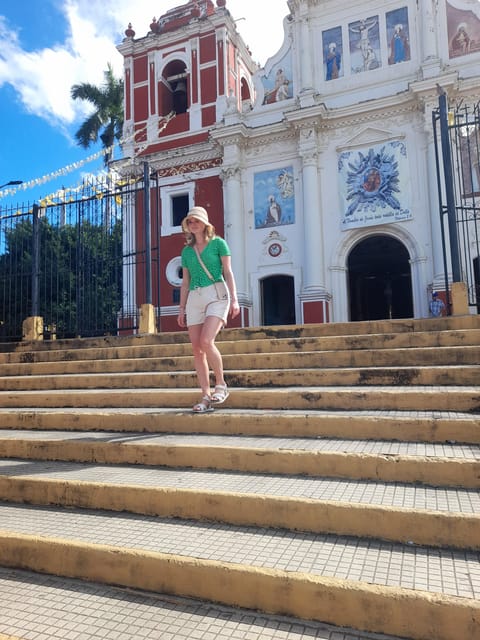
walking_tourThe León city Walking Tour by Our Landmarks moves through a city that feels heavier, grittier, and more ideologically charged than its more polished rival Granada. Your guide walks you past the Basilica de la Asunción, the largest cathedral in Central America, its white bulk squatting over the central plaza like a limestone glacier, and through streets where revolutionary murals in saturated reds and blacks still cover entire building sides, the paint cracking but the imagery sharp. The air smells of corn tortillas pressing on hot comals behind open doorways, and the slap of dough against iron is the ambient soundtrack of every residential block you pass through.
León is Nicaragua's intellectual and revolutionary heart, and on foot is the only way to read its walls, every mural, bullet scar, and hand-painted political slogan tells a story that a vehicle would blur past.
Insider tip: Start the walk before eight in the morning; León sits in a lowland basin and March temperatures climb fast, making a midday walking tour punishing on shadeless streets.

From Managua: León, Sandboarding Cerro Negro + Cathedral UNESCO
culturalFrom Managua: León, Sandboarding Cerro Negro and Cathedral UNESCO is the tour that earns Nicaragua its reputation as Central America's most underrated adventure destination. Cerro Negro is a jet-black cinder cone that rose from a cornfield in 1850 and has erupted more than twenty times since. You hike up its loose, gravelly flank, each step sliding back half its length in warm volcanic grit, then sit on a wooden board at the summit and ride down the slope at speeds that kick a rooster tail of fine black ash into the air behind you. The ash gets everywhere: in your teeth, in the creases of your ears, ground into the weave of your clothes. Afterward, the tour brings you to León's UNESCO-listed cathedral, where the cool limestone interior feels like stepping into a cave after the exposed heat of the volcano, and your footsteps echo off stone floors worn smooth by four centuries of parishioners.
Sandboarding an active volcano is a singular physical experience that exists in very few places on Earth, and pairing it with León's cathedral gives the day both adrenaline and architectural gravity.
Insider tip: Wear long pants and closed-toe shoes for the board descent, the volcanic gravel is abrasive enough to scrape exposed skin raw, and rental jumpsuits offered at the base are often sized for smaller frames.
This month: March's bone-dry conditions make Cerro Negro's slope fast and firm, wet-season rain turns the same ash to a sluggish, clumpy surface that dramatically slows the sandboard.

2 full days tour Granada + Lava+Leon area
day_tripThe 2 Full Days Tour Granada plus Lava plus León Area is the itinerary for travelers who want Nicaragua's Pacific corridor distilled into a single coherent arc without the logistical friction of arranging each leg independently. Day one plants you in Granada, where you walk beneath archways draped in bougainvillea so deep magenta it looks painted, then takes you to the lip of Masaya's active crater at dusk, when the fading daylight lets you see the faint orange glow reflected off the sulfur plume from below. Day two swings north to León's revolutionary streetscape and, depending on conditions, out to Cerro Negro's black flanks. The overnight in Granada means you eat dinner in a city where courtyard restaurants serve cacao-rubbed pork and vigorón, the cabbage-and-chicharrón salad dressed in a vinegar sharp enough to make your eyes water.
Two days, two colonial cities, one active volcano, and zero self-navigated bus terminals, it is the most efficient way to absorb Nicaragua's Pacific spine without driving yourself.
Insider tip: Pack a headlamp for the Masaya evening visit. The path from the parking area to the crater viewpoint is unlit, and the sulfur haze kills ambient starlight on overcast nights.

Masaya Volcano Night Tour!!!
guided_experienceThe Masaya Volcano Night Tour is Nicaragua distilled to its most primal element: standing on the edge of an active crater in the dark, staring down at molten rock. Santiago crater's lava lake is not always visible, it cycles through phases of activity. But the glow against the sulfur plume is a constant, turning the smoke column orange and pink against a black sky. The heat radiating up from the vent is startling. You feel it on your forearms and across your cheeks like standing too close to a bonfire, and the roar of venting gas is low enough to feel in your chest rather than hear with your ears. Park rangers limit time at the rim to roughly fifteen minutes per group, which concentrates the experience into something intense and slightly unsettling.
Few places on Earth let you stand this close to volcanic activity after dark with nothing between you and the crater but a concrete railing and your own nerve.
Insider tip: Arrive at the park gate at least thirty minutes before your scheduled slot. The access road is one lane in places and March weekend crowds create bottlenecks that can eat into your crater time.
This month: Clear March skies mean no cloud cap on the crater, the sulfur plume rises and disperses rather than pooling at the rim, which improves both visibility and air quality at the viewpoint.

Granada Islets Boat Tour (The best in town)
cruiseThe Granada Islets Boat Tour glides through Las Isletas, a scatter of over three hundred tiny islands formed when Mombacho Volcano's flank collapsed into Lake Nicaragua thousands of years ago. Some hold a single house and a mango tree. Others are just a knuckle of volcanic rock with a cormorant drying its wings. The water in March is glassy calm, no afternoon storm chop, and the boat motor cuts the only wake, sending small waves lapping against shorelines where howler monkeys sit in cecropia trees, their territorial bellowing carrying across the flat water with startling volume. The smell is clean and vegetal, lake water mixed with the green scent of water hyacinth, and the sun on the surface throws moving light patterns onto the underside of overhanging branches.
It is the only way to understand Granada's geography, the city sits at the foot of a volcano whose ancient eruption created an inland archipelago, and from the water you see how city, volcano, and lake connect.
Insider tip: Bring your own water and a wide-brimmed hat. There is almost no shade on the smaller pangas, and the March sun reflecting off Lake Nicaragua doubles the UV exposure in a way that sneaks past sunscreen applied only once.
This month: Lake Nicaragua's water level is near its annual low in March, which exposes more shoreline on the isletas and makes it easier to spot birds, iguanas, and other wildlife that retreat to the waterline.
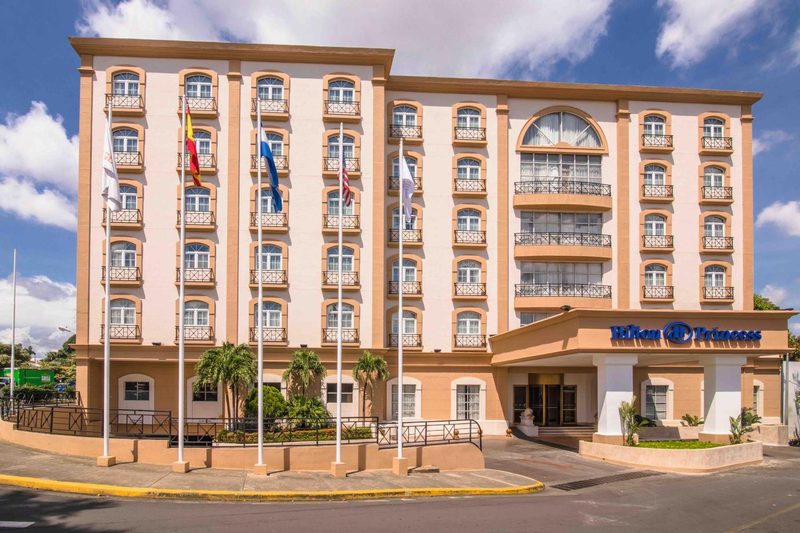
Where to Stay in Nicaragua in March
Hand-picked hotels across price tiers for March travellers.
Packing Checklist
Bookmark this page — your progress is saved between visits
Need the full list with shopping links?
Climate-specific gear, brand recommendations, and what to leave at home.
View Nicaragua Packing List →Essential Tips
Insider knowledge and common pitfalls to avoid
Insider Knowledge
Nicaragua's tourist corridors, Granada, León, San Juan del Sur, Ometepe, are generally safe for travelers exercising normal awareness. The political situation has been tense since 2018, and checking your government's current travel advisory before booking is worth doing, but day-to-day safety in these areas comes down to the same instincts you would use elsewhere in Central America: avoid unfamiliar neighborhoods after dark, keep valuables discreet, use registered taxis or pre-arranged transport rather than flagging vehicles off the street. Managua has higher street-crime rates than the tourist towns and works best as a transit hub rather than a destination in itself.
ATMs outside Managua, Granada, and León can be unreliable or flat-out empty. Carry enough córdobas in cash for two to three days when heading to smaller towns or Ometepe, and keep small denominations, breaking a large note at a rural comedor or market stall is often impossible. US dollars are accepted in some tourist-facing businesses. But the exchange rate they offer tends to be worse than what you will get at a bank in Managua.
The best meals in Nicaragua happen at fritangas, the open-air evening food stalls that materialize on street corners around 5 PM in every town. Follow the longest local queue. The standard plate is a mound of gallo pinto, a stack of tajadas (fried plantain chips), a slab of crumbly cuajada cheese, and whatever meat is smoking on the charcoal grill, usually pollo or cerdo. The smell of the coals and sizzling fat pulls you in from a block away. This is where Nicaraguans eat, and the food is honest, filling, and far better than most sit-down tourist restaurants charging three times the price.
If visiting during Semana Santa (March 21-28, 2027), book your León and Granada accommodations at least a month ahead. Prices rise sharply during Holy Week, and the best-located places sell out even earlier. Arrive in León by Wednesday of that week to watch the alfombra artisans work through the night, they lay out the sawdust patterns on the street in a careful, quiet process that is almost as moving as the procession that destroys them the next day. By Good Friday evening, León's streets are thick with incense smoke, brass-band dirges, and thousands of people walking slowly behind the floats. It is not comfortable, and it is memorable.
Avoid These Mistakes
Trying to cover both the Pacific coast and the Caribbean Corn Islands in a single week. The overland route east takes a full grinding day on rough roads to El Rama, then a panga down the Escondido River to Bluefields, then a small plane or cargo boat to the islands. Most travelers fly from Managua, which adds cost and a logistical layer. Pick one coast per trip unless you have at least two weeks. The Pacific side, San Juan del Sur, the volcanoes, the colonial cities, is the natural fit for a first visit in March.
Underestimating how fast March dehydrates you. The 33°C (92°F) heat and 58% humidity feel manageable at first. But the dry air pulls moisture without triggering the heavy sweat response you might expect. Travelers routinely wait until they feel thirsty before drinking, and by then they are already dehydrated enough for headaches and fatigue. Start every morning with a full liter before stepping outside, and carry at least two liters on any hike.
Scheduling outdoor activities between noon and 3 PM. Managua's pavement and Granada's stone plazas radiate stored heat intensely in those hours, and even locals retreat indoors. The Nicaraguan rhythm, early morning activity, long midday break with food and a hammock, then a second push from late afternoon into evening, exists for a reason. Fight it at your own expense. Plan volcano hikes, market walks, and city exploration for the early morning or the golden-light hours after 4 PM.
Ready to plan your trip to Nicaragua?
Now that you've got the research covered, here's where to go next.
Explore More Activities in Nicaragua
Didn't see anything interesting yet?
Browse Viator's full catalog of tours, day trips, food experiences, and private guides in Nicaragua.
See All Nicaragua Tours on Viator